
All tool categories / Essential Plumbing Tools
Essential Plumbing Tools
Explore the plumbing
What is inside a toilet?
Tap a number or part name to see what it does and what to look for.
A common gravity-flush toilet, shown in cutaway. Flush mechanisms and shapes vary.
1. Fill valve
Refills the tank after a flush. Its float responds to the rising water level.
A running toilet can have more than one cause; a fill valve is only one part to check.
Parts & tools
Paid links: Sergeant Plumber Corp. may earn a commission at no additional cost to you.

2. Flapper
Seals the flush-valve opening at the bottom of many toilet tanks. It lifts to let water into the bowl.
A worn or mismatched flapper can let water leak from the tank into the bowl. Some toilets use a canister instead.
Parts & tools
Paid links: Sergeant Plumber Corp. may earn a commission at no additional cost to you.

For compatible 2-inch flush valves; confirm your toilet model.
3. Overflow tube
Provides a route from the tank into the bowl if the tank water rises too high. The refill tube supplies bowl refill water here.
It is different from the flapper. Use the toilet and valve instructions to identify the correct parts.
Get help with a running toilet →
Parts & tools
Paid links: Sergeant Plumber Corp. may earn a commission at no additional cost to you.

Fluidmaster adjustable 2-inch flush-valve kit
Includes an adjustable overflow assembly; match tank and bowl fit.
4. Supply stop
The local valve controls incoming water to the toilet. The flexible connector runs from it to the fill valve.
A seized valve or leaking connector needs attention; do not force a stuck valve.
Parts & tools
Paid links: Sergeant Plumber Corp. may earn a commission at no additional cost to you.

Fluidmaster 12-inch toilet supply
3/8-inch compression × 7/8-inch ballcock; measure reach.

BrassCraft quarter-turn angle stop
Match inlet and outlet sizes to the existing supply.
5. Trapway
This curved passage carries waste from the bowl toward the drain. Water remaining in the bowl helps block sewer gases.
A toilet auger is designed for the fixture. Repeated clogs or multiple backed-up fixtures need further diagnosis.
Related tool
Paid links: Sergeant Plumber Corp. may earn a commission at no additional cost to you.

Related clearing tool. The trapway itself is built into the toilet.
Illustrations explain common parts and conditions. They do not diagnose your home or replace the instructions for your specific equipment.
Build a practical tool kit by the type of work you need to do.
Product links are paid links. Sergeant Plumber Corp. may earn a commission at no additional cost to you. As an Amazon Associate, Sergeant Plumber Corp. may earn from qualifying purchases.
Choose tools that fit the fixture and material. For leaks, unfamiliar shutoffs or work requiring heat, consider professional service.

Sink & faucet toolsBasin wrenches and mounting tools
3 options
RIDGID
1017 Telescoping Basin Wrench
⅜–1¼ in. jaw · 10–17 in. reach
Reach nuts behind the sink basin.
Fit details
Catalog 31175. Check nut size, jaw access and handle swing beneath the sink. The telescoping length does not increase the jaw opening.
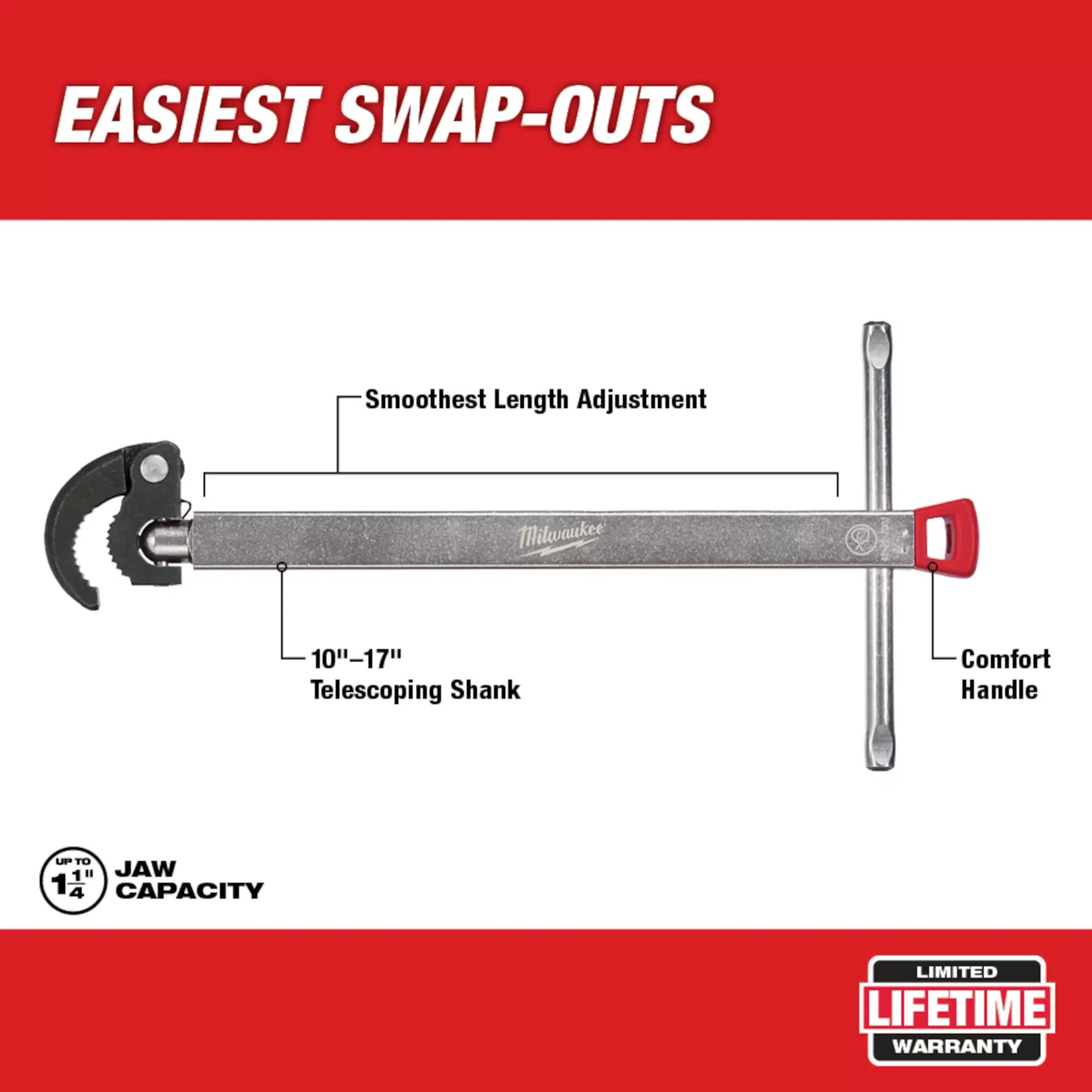
Milwaukee
Telescoping Basin Wrench
1¼ in. jaw · 10–17 in. reach
Ratchet-ready handle for tight access.
Fit details
Model 48-22-7001. Confirm jaw fit and working space. The 48-22-7002 is a different, larger-capacity version.
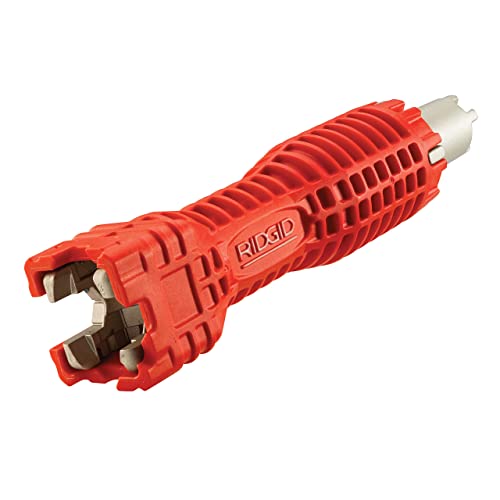
RIDGID
EZ Change Faucet Tool
2, 3, 4 & 6-tab mounting nuts
For compatible faucet hardware.
Fit details
Catalog 57003. Match nut shape and clearance before buying; this is not a universal fit for every faucet, supply connection or mounting bracket.

Wrenches & pliersSmooth-jaw and gripping options
4 options
KNIPEX
10-in. Pliers Wrench
Up to 2 in. hex capacity
Parallel smooth jaws for flats.
Fit details
Model 86 03 250 SBA. Size across the flats. Smooth jaws can still mark a finish; check fixture instructions and protect delicate surfaces.

KNIPEX
10-in. Cobra Pliers
Up to 2 in. round capacity
Toothed jaws for a secure grip.
Fit details
Model 87 01 250, 25 positions. Toothed jaws can damage chrome and soft materials. Round-pipe capacity differs from nut capacity.
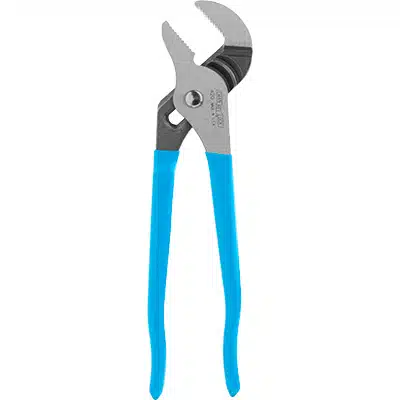
CHANNELLOCK
420 Tongue & Groove Pliers
1½ in. jaw capacity
9½-in. straight-jaw pliers.
Fit details
Model 420. Toothed jaws grip unfinished surfaces and can mark chrome or soft materials. Tool length is not the jaw capacity.

RIDGID
12-in. Straight Pipe Wrench
Up to 2 in. nominal pipe
For suitable metal pipe surfaces.
Fit details
Catalog 31015. Nominal steel-pipe capacity is not the same as an opening measured across a nut. Do not use toothed jaws on finished fixture trim.

Copper cutting & preparationMini cutters and reamers
3 options
RIDGID
101 Mini Cutter
¼–1⅛ in. OD
Compact cutter for tight spaces.
Fit details
Catalog 40617; standard E-3469 copper wheel. Allow room for the complete cutter to rotate. The 101-ML is a different model.
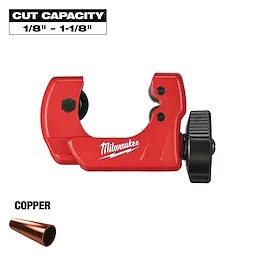
Milwaukee
1-in. Mini Tubing Cutter
⅛–1⅛ in. OD
Compact copper cutter with spare blade.
Fit details
Model 48-22-4251. Check actual tube diameter and full rotation clearance; the 1-in. name is not its minimum or maximum OD.
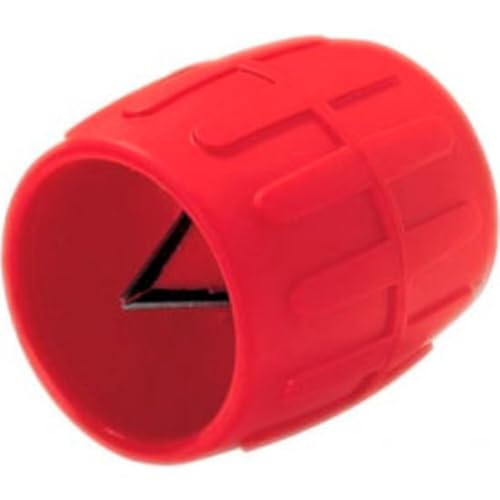
RIDGID
127 Inner/Outer Reamer
¼–1½ in. OD
Prepare both edges of copper tube.
Fit details
Match Model 127, listing 34965 / current catalog 34965R. The 127S is different. Reaming does not replace cleaning the tube and fitting.
Need more capacity or a powered cutter?

Soldering toolsFor trained open-flame work
3 options
Bernzomatic
TS8000 Torch Head
Compatible fuel cylinder required
For trained soldering and heating work.
Fit details
Confirm approved fuel, cylinder connection and package contents. Open-flame work requires fire protection, ventilation and training; do not heat a pressurized or unknown line.
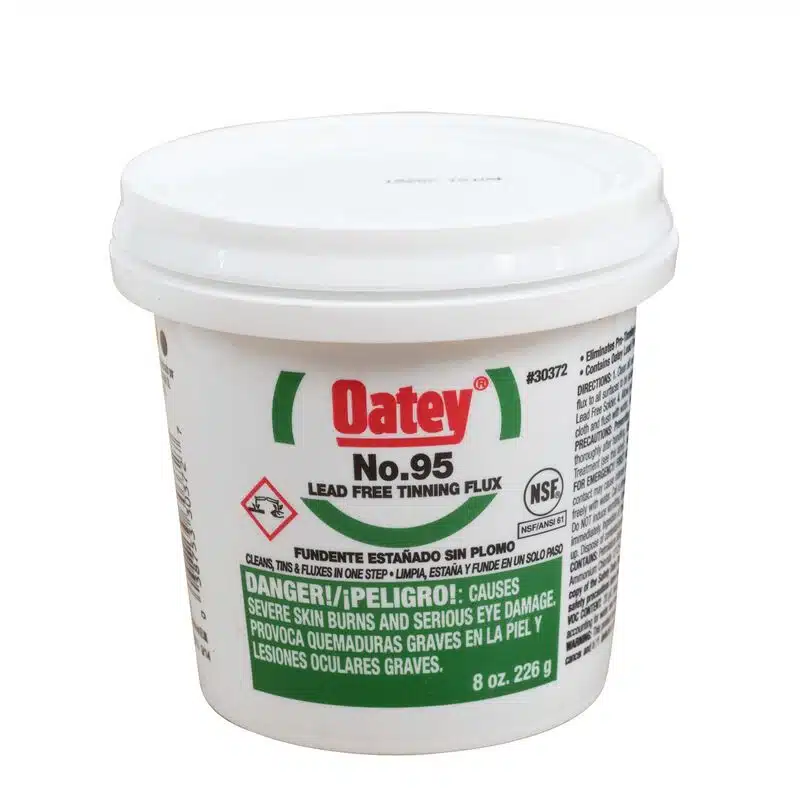
Oatey
No. 95 Tinning Flux
8 oz · model 30372
Tinning flux for compatible solder joints.
Fit details
Petrolatum-based formula with tinning powder. Follow flux, solder and fitting instructions, including cleaning after soldering. Check the selected container size.
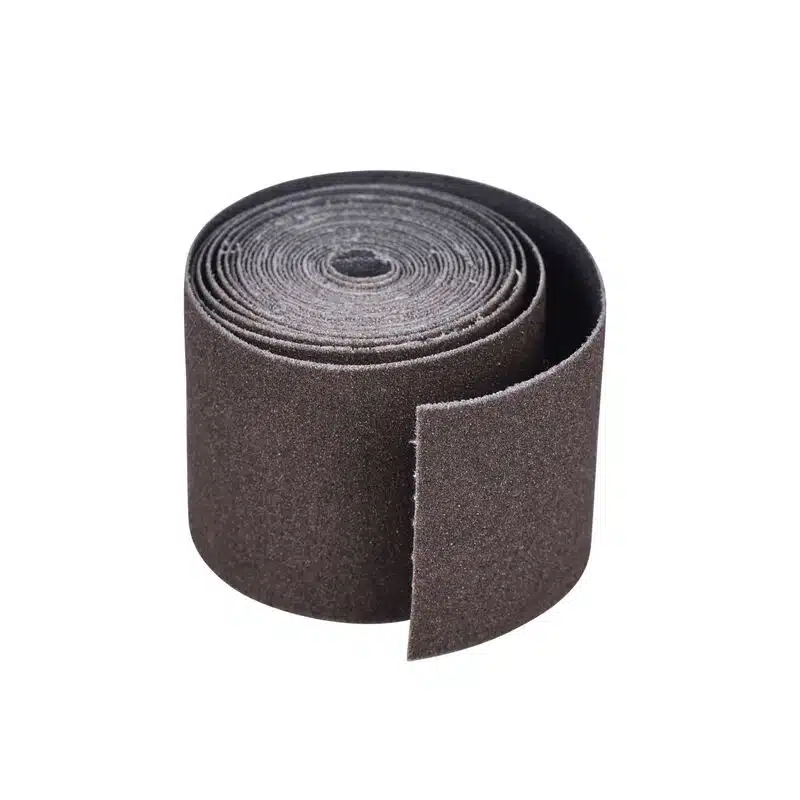
Oatey
Plumber’s Sandcloth
1½ in. wide · 120 grit
Abrasive cloth for surface preparation.
Fit details
Model 31315, 2-yard roll. Check the listing’s roll length. Abrasive cloth cleans the surface; remove cutting burrs separately.


