
Leak Detection Services in The Colony, TX
Explore your water heater
Choose electric or gas, then tap a number or select a part to see what it does and what to check.
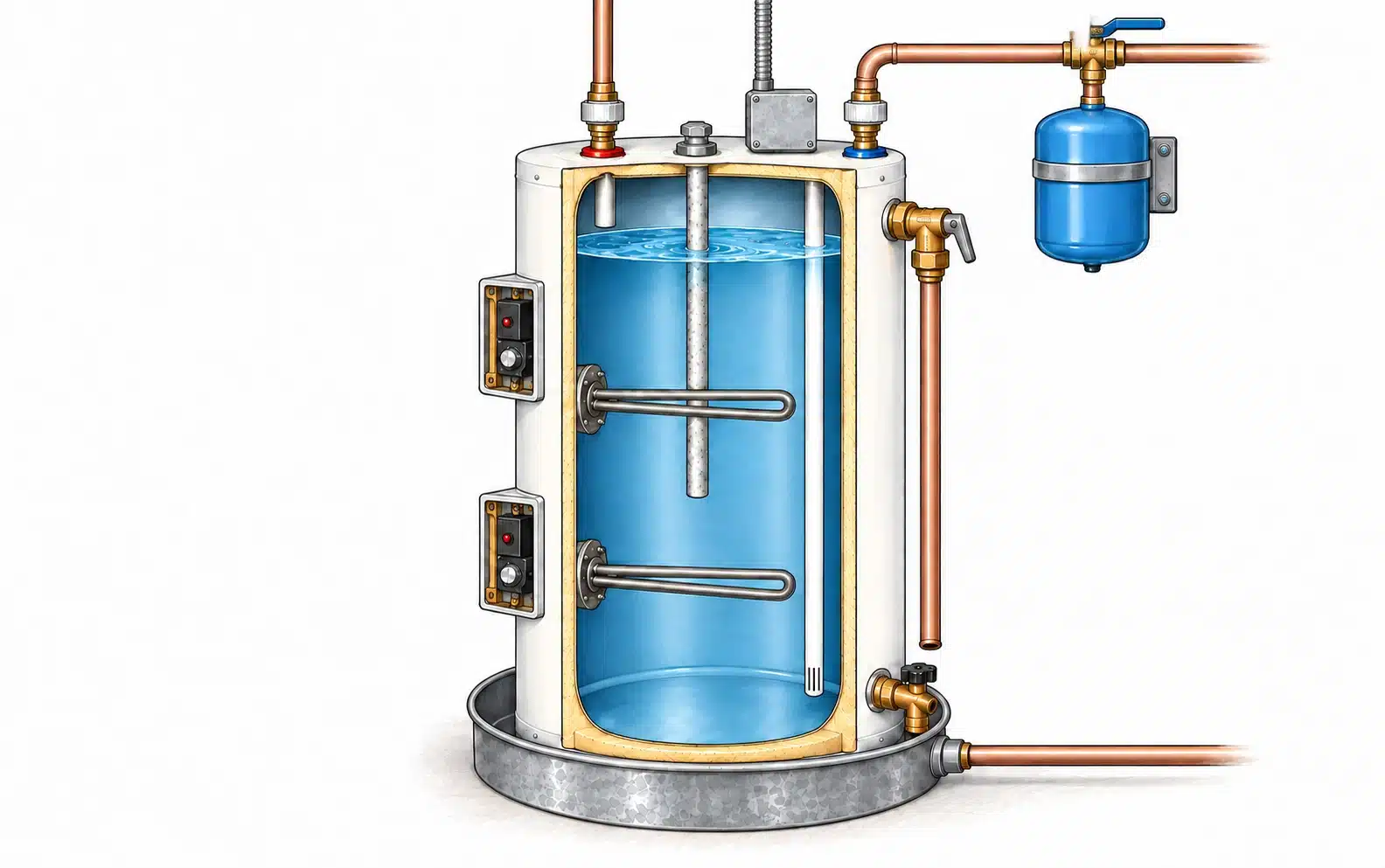
Illustrated cutaway for identification. Wiring and installation details are omitted.
See all 15 labeled parts
1. Cold inlet & dip tube
Incoming cold water travels down the dip tube toward the bottom of the tank.
Replacement dip tubes are model-specific; confirm the heater model and manufacturer part number.
A closer look at the parts
Paid links: Sergeant Plumber Corp. may earn a commission at no additional cost to you.

2. Hot-water outlet
Heated water leaves through the outlet near the top of the tank.
Match the connection size, material and temperature rating.
A closer look at the parts
Paid links: Sergeant Plumber Corp. may earn a commission at no additional cost to you.
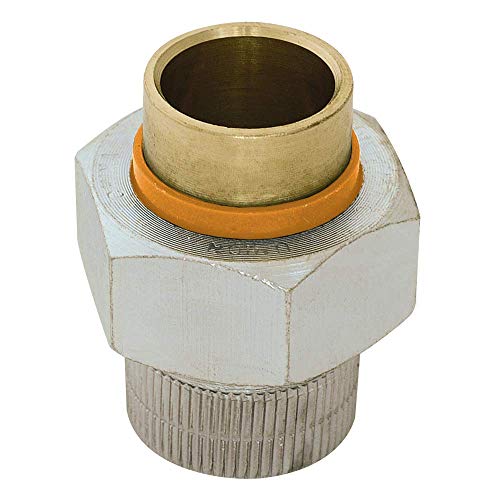
¾-inch FIP × ¾-inch solder; confirm approved connection method.
View on Amazon ↗3. Cold-water shutoff
This valve stops new cold water entering the heater.
Shutting the supply does not remove water already stored in a leaking tank.
A closer look at the parts
Paid links: Sergeant Plumber Corp. may earn a commission at no additional cost to you.
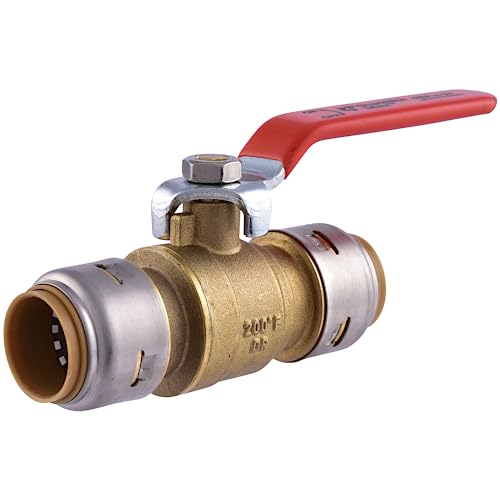
Push-to-connect valve for listed compatible tubing; check heater instructions.
View on Amazon ↗4. Expansion tank
A potable-water expansion tank provides space for water to expand as it heats in a closed system.
Tank size, air charge, location and independent support must suit the system.
A closer look at the parts
Paid links: Sergeant Plumber Corp. may earn a commission at no additional cost to you.

Potable-water expansion tank; size and precharge must suit the system.
View on Amazon ↗5. Dielectric connections
Dielectric unions or approved connectors help separate dissimilar metals at the water connections.
Use the connection method specified for the heater; built-in dielectric nipples and approved connectors vary.
A closer look at the parts
Paid links: Sergeant Plumber Corp. may earn a commission at no additional cost to you.
¾-inch FIP × ¾-inch solder. Not required with every connection design.
View on Amazon ↗6. T&P relief valve & discharge
This safety valve responds to excessive temperature or pressure. Its discharge pipe carries released hot water to an approved termination.
Never cap the valve or discharge pipe. A plumber should identify why it is discharging.
A closer look at the parts
Paid links: Sergeant Plumber Corp. may earn a commission at no additional cost to you.

Extended probe; a plumber must match pressure, temperature and capacity ratings.
View on Amazon ↗7. Anode rod
A sacrificial anode helps protect the steel tank from internal corrosion.
Match the rod material, thread, length and available overhead clearance to the heater.
A closer look at the parts
Paid links: Sergeant Plumber Corp. may earn a commission at no additional cost to you.

Nipple-style connection; match the exact heater and installation clearance.
View on Amazon ↗8. Tank drain valve
The drain valve connects to the tank near its base for draining and maintenance.
Water can be scalding. Valve length, thread and installation must match the heater.
A closer look at the parts
Paid links: Sergeant Plumber Corp. may earn a commission at no additional cost to you.

Straight drain valve; check thread, length and heater compatibility.
View on Amazon ↗9. Drain pan
A pan catches some leakage beneath the tank and directs it toward its drain connection.
Choose the correct diameter, depth and material. A pan cannot contain every leak.
A closer look at the parts
Paid links: Sergeant Plumber Corp. may earn a commission at no additional cost to you.

For suitable electric-heater applications only; verify required clearance and drain connection.
View on Amazon ↗10. Pan drain
This separate pipe carries water away from the drain pan.
It is separate from the tank drain valve and the T&P discharge; routing and termination require correct installation.
Get help identifying the right part →11. Upper heating element
The upper immersion element heats water near the top of a conventional two-element electric heater.
Match voltage, wattage, mounting style and element length. Electrical servicing requires power isolation and verification.
A closer look at the parts
Paid links: Sergeant Plumber Corp. may earn a commission at no additional cost to you.

4500 W, 240 V, screw-in low-watt-density element; match the heater label.
View on Amazon ↗12. Upper thermostat & high limit
The upper thermostat controls heating near the top; the high-limit device interrupts power if temperature becomes excessive.
A tripped high limit needs diagnosis. Match the exact control and wiring arrangement.
A closer look at the parts
Paid links: Sergeant Plumber Corp. may earn a commission at no additional cost to you.

Apcom-style kit with thermostats and elements; confirm all specifications before ordering.
View on Amazon ↗13. Lower heating element
The lower element heats the lower portion of the tank. Many conventional units operate one element at a time.
Match the heater label and approved replacement part; do not assume upper and lower components are identical.
A closer look at the parts
Paid links: Sergeant Plumber Corp. may earn a commission at no additional cost to you.
4500 W, 240 V, screw-in low-watt-density element; match length and mounting.
View on Amazon ↗14. Lower thermostat
The lower thermostat responds to tank temperature and controls the lower heating cycle.
Do not remove covers or touch wiring with power on. Diagnosis should come before replacing parts.
A closer look at the parts
Paid links: Sergeant Plumber Corp. may earn a commission at no additional cost to you.

Apcom-style lower control; verify model and wiring compatibility.
View on Amazon ↗15. Electrical junction box
The power supply connects to the heater at its electrical junction box.
Circuit, grounding and wiring requirements depend on the heater. The drawing omits wiring details.
Get help identifying the right part →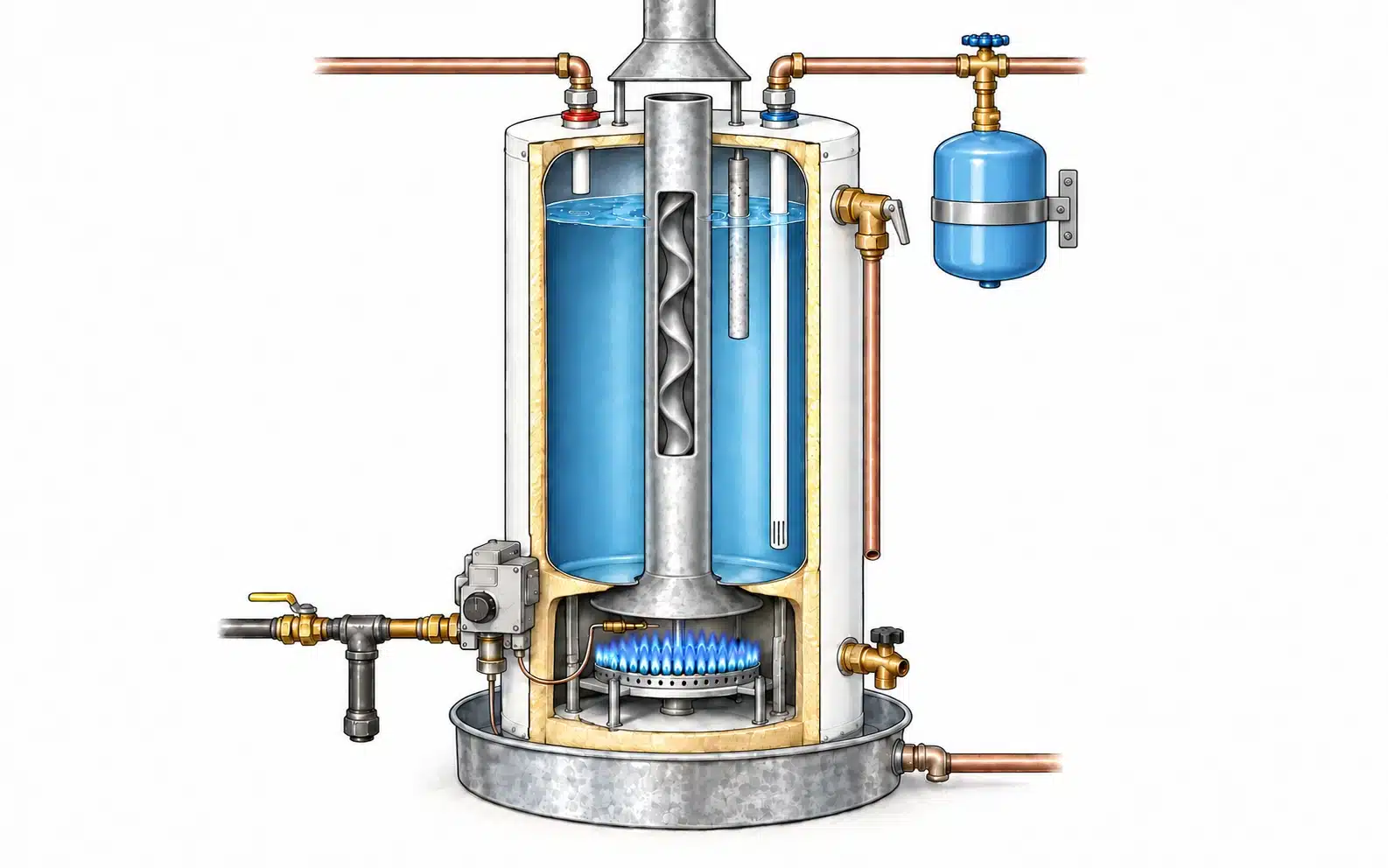
Illustrated cutaway for identification. Power-vent, direct-vent and condensing models differ.
See all 17 labeled parts
1. Cold inlet & dip tube
Incoming cold water travels down the dip tube toward the bottom of the tank.
Replacement dip tubes are model-specific; confirm the heater model and manufacturer part number.
A closer look at the parts
Paid links: Sergeant Plumber Corp. may earn a commission at no additional cost to you.
2. Hot-water outlet
Heated water leaves through the outlet near the top of the tank.
Match the connection size, material and temperature rating.
A closer look at the parts
Paid links: Sergeant Plumber Corp. may earn a commission at no additional cost to you.
¾-inch FIP × ¾-inch solder; confirm approved connection method.
View on Amazon ↗3. Cold-water shutoff
This valve stops new cold water entering the heater.
Shutting the supply does not remove water already stored in a leaking tank.
A closer look at the parts
Paid links: Sergeant Plumber Corp. may earn a commission at no additional cost to you.
Push-to-connect valve for listed compatible tubing; check heater instructions.
View on Amazon ↗4. Expansion tank
A potable-water expansion tank provides space for water to expand as it heats in a closed system.
Tank size, air charge, location and independent support must suit the system.
A closer look at the parts
Paid links: Sergeant Plumber Corp. may earn a commission at no additional cost to you.
Potable-water expansion tank; size and precharge must suit the system.
View on Amazon ↗5. Dielectric connections
Dielectric unions or approved connectors help separate dissimilar metals at the water connections.
Use the connection method specified for the heater; built-in dielectric nipples and approved connectors vary.
A closer look at the parts
Paid links: Sergeant Plumber Corp. may earn a commission at no additional cost to you.
¾-inch FIP × ¾-inch solder. Not required with every connection design.
View on Amazon ↗6. T&P relief valve & discharge
This safety valve responds to excessive temperature or pressure. Its discharge pipe carries released hot water to an approved termination.
Never cap the valve or discharge pipe. A plumber should identify why it is discharging.
A closer look at the parts
Paid links: Sergeant Plumber Corp. may earn a commission at no additional cost to you.
Extended probe; a plumber must match pressure, temperature and capacity ratings.
View on Amazon ↗7. Anode rod
A sacrificial anode helps protect the steel tank from internal corrosion.
Match the rod material, thread, length and available overhead clearance to the heater.
A closer look at the parts
Paid links: Sergeant Plumber Corp. may earn a commission at no additional cost to you.
Nipple-style connection; match the exact heater and installation clearance.
View on Amazon ↗8. Tank drain valve
The drain valve connects to the tank near its base for draining and maintenance.
Water can be scalding. Valve length, thread and installation must match the heater.
A closer look at the parts
Paid links: Sergeant Plumber Corp. may earn a commission at no additional cost to you.
Straight drain valve; check thread, length and heater compatibility.
View on Amazon ↗9. Drain pan
A pan catches some leakage beneath the tank and directs it toward its drain connection.
Choose the correct diameter, depth and material. A pan cannot contain every leak.
Get help identifying the right part →10. Pan drain
This separate pipe carries water away from the drain pan.
It is separate from the tank drain valve and the T&P discharge; routing and termination require correct installation.
Get help identifying the right part →11. Burner assembly
The burner heats the base of the tank from a separate combustion chamber below the stored water.
Burner and orifice selection depend on the exact heater and fuel. Gas service requires qualified diagnosis.
Get help identifying the right part →12. Gas control & thermostat
The gas control regulates fuel to the burner in response to water temperature and the safety controls.
Replacement gas controls are model- and fuel-specific; similar appearance does not establish compatibility.
Get help identifying the right part →13. Pilot / ignition & flame sensing
The ignition and flame-sensing components establish and monitor burner operation. Designs vary.
Some heaters have standing pilots; others use electronic ignition. Use the exact manufacturer assembly.
Get help identifying the right part →14. Flue & internal baffle
Combustion gases rise through a sealed flue inside the tank. The internal baffle guides the gases and aids heat transfer.
The flue separates combustion gases from the water. Venting problems need prompt professional assessment.
Get help identifying the right part →15. Draft hood & vent
This conventional atmospheric-vent example has a draft hood above the tank leading to the vent.
Power-vent, direct-vent and condensing gas heaters use different systems. Use the specified draft hood and vent design.
Get help identifying the right part →16. Manual gas shutoff
A separate manual gas valve controls fuel supply to the heater.
If you smell gas, leave the area and contact the gas utility or emergency services from a safe location.
Get help identifying the right part →17. Sediment trap
A capped collection leg in the gas piping helps keep debris from entering the gas control.
Location and assembly must follow the heater instructions and applicable requirements.
Get help identifying the right part →Professional Plumbing Leak Detection
Hidden plumbing leaks can increase utility costs, damage building materials, create unpleasant odors, and lead to more extensive repairs when left unresolved. Sergeant Plumber Corp. provides professional water, sewer, and gas leak detection services in The Colony and surrounding North Texas communities.
We will begin by discussing the symptoms you have noticed and evaluating the accessible plumbing system. The testing method will depend on the type and location of the suspected leak. Once the diagnostic work is complete, we will explain the findings and provide available repair options.
Water Leak Detection
Hidden water leaks can occur beneath slabs, inside walls, under floors, or in underground water lines. We use pressure testing, acoustic equipment, meter evaluation, isolation procedures, and other appropriate methods to help locate the source.
A higher bill with no visible leak? Read our high-water-bill checklist for useful observations to gather before an evaluation.
Sewer Leak Detection
Sewer leaks can cause odors, recurring backups, foundation-area moisture, or unexplained drainage problems. Depending on the situation, testing may include camera inspection, isolation testing, smoke testing, drain testing, or sewer-line locating.
Gas Leak Detection
Gas-system testing can help determine whether accessible piping is losing pressure and help locate a suspected leak. Testing may include pressure testing, electronic detection equipment, visual inspection, and isolation of accessible sections.
Signs You May Have a Hidden Plumbing Leak
Some leaks are easy to see, while others remain concealed beneath the foundation, behind walls, underground, or inside a drainage system. Leak detection may be recommended if you notice:
Gas Leak Emergency
If you smell gas or suspect an active gas leak, leave the area immediately. From a safe location, call 911 and your natural-gas utility. Do not operate electrical switches, phones, appliances, vehicles, or anything else that could create a spark in the affected area.
What to Expect During Leak Detection
1. Initial Assessment and Service Fee
We will ask about the symptoms you have noticed, when the problem began, and any previous plumbing work or testing. The applicable service or diagnostic fee will be explained before the appointment is scheduled. This fee covers the agreed initial visit and diagnostic scope.
2. Systematic Diagnostic Testing
Testing will be selected based on the suspected system and location of the leak. This may include visual inspection, meter evaluation, pressure testing, isolation testing, acoustic equipment, sewer-camera inspection, smoke testing, or other appropriate diagnostic methods.
3. Findings and Repair Options
After the testing is complete, we will explain the findings and the recommended next step. If repair work, additional testing, excavation, destructive access, or another service is needed, separate pricing will be provided before that work begins.
Important Information About Leak Detection
Leak detection is an investigative process. Building construction, pipe materials, accessibility, background noise, multiple leaks, and existing system conditions can affect the testing process. In some situations, additional testing or controlled access may be necessary to confirm the exact source and repair location.
Need Help Finding a Plumbing Leak?
Unexplained water usage, recurring moisture, sewer odors, or suspected piping problems may require professional diagnostic testing. Call, text, or request service to discuss the symptoms and schedule an evaluation.
Real plumbing jobs. Practical advice.
Follow Sergeant Plumber Corp. for real job videos, homeowner tips, and tool advice from Bryan.

Bryan Messman | Responsible Master Plumber | M-43168
Regulated by the Texas State Board of Plumbing Examiners
7915 Cameron Road, Austin, TX 78754 | (512)936-5200
Copyright 2026 Sergeant Plumber Corp., all rights reserved.