
Slow-Close Toilet Seats: What to Measure Beyond Bowl Shape
Round versus elongated is only the first toilet-seat measurement. Bolt spacing, bowl length, mounting access, hinge footprint, rim shape, and nearby hardware determine whether a slow-close seat installs securely and stays aligned.
Quick answer
Measure from the midpoint between the mounting holes to the front edge of the bowl, record center-to-center bolt spacing, and verify whether the nuts are accessible from below. Then check bowl width, hinge clearance, lid height against the tank, and interference from bidet attachments or grab hardware. Select a slow-close seat by actual dimensions and mounting system, not a visual guess from bowl shape.

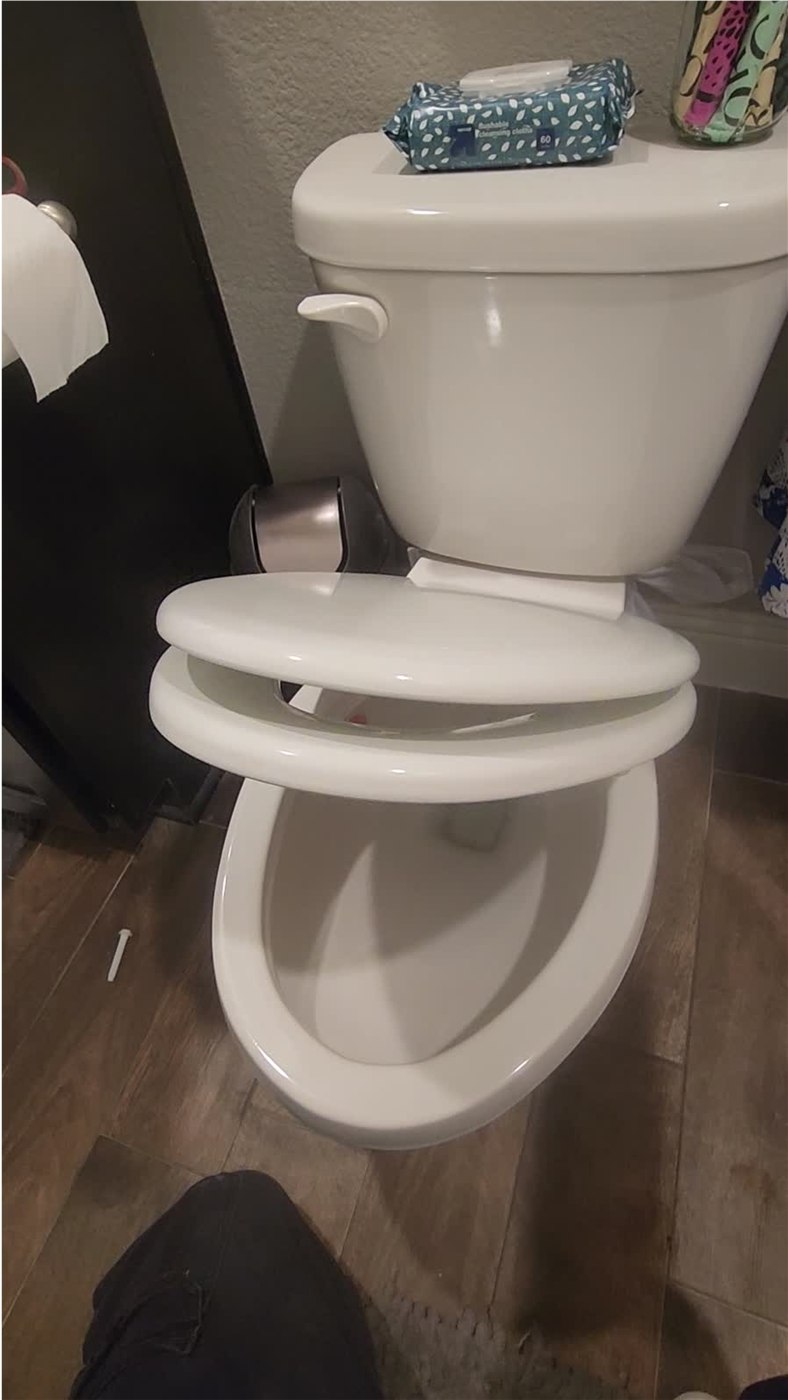
This generic toilet shows the rear mounting area and bowl outline. Take measurements from your own bowl before choosing a replacement seat.
- Rear mounting areaConfirm the bolt spacing and mounting access.
- Seat and bowl outlineRound and elongated shapes are not interchangeable.
- Front of bowlMeasure the real fixture; a generic drawing cannot establish fit.
Who this guide is for
This guide is for homeowners replacing a standard toilet seat or adding slow-close hinges. It also helps identify situations where proprietary, skirted, bidet, or accessibility fixtures need model-specific hardware.
How we evaluated the fit
Recommendations rely on fixture measurements, fastening access, hinge mechanics, material care, and product descriptions. No comfort ranking or hands-on durability claim is made because body fit and installation conditions vary.
Three checks that matter first
Use these checkpoints to narrow the field before comparing individual models.
Establish the bowl's true length
Measure from the centerline between the two seat-bolt holes to the furthest front edge of the porcelain. That dimension distinguishes typical round and elongated forms more reliably than appearance. Keep the tape centered instead of following the bowl's curved side.
Identify top-mount or through-bolt access
Traditional bowls expose nuts beneath the rear ledge. Fully skirted toilets may hide that area and require top-fixing anchors or maker-specific hardware. Look underneath before buying; a seat with the right outline can still be impossible to tighten with the supplied fasteners.
Allow the hinge to work freely
Slow-close hinges need room to rotate without the lid rubbing the tank or a bidet control. Compare the hinge footprint, lid height, and adjustment range. The damped motion should close the seat; it should not be used as a handle or forced down faster.
Build a complete measurement sheet
For a visual measuring reference, use Bemis’s toilet-seat measurement guide. Compare your recorded dimensions with the exact seat’s current specifications.
Start with the old seat down and photograph its alignment. Record bowl length, maximum width, and bolt spacing using a rigid tape. Note whether the porcelain holes are round, slotted, or unusually large. Check the flat mounting surface behind the opening and measure the gap from the bolt centerline to the tank. A broad decorative tank or raised porcelain ridge can limit hinge placement.
Inspect access beneath the bowl with a light. If a wrench cannot reach the nuts because the toilet is skirted or close to a wall, identify the toilet model and locate its recommended top-mount system. Also record any bidet plate, child-seat insert, riser, safety rail, or remote holder sharing the mounting area. Stacking hardware without compatible fastener length can leave the assembly loose.
Understand slow-close hinge behavior
A slow-close mechanism adds controlled resistance to lid and seat movement. That can reduce slamming, but it also changes how the seat should be handled. Pushing the lid down can load the dampers in a way the instructions do not permit. Teach users to start the movement and let the hinge finish. If the lid pauses against the tank or accessory, correct the alignment rather than forcing it.
Hinges differ in adjustability and release features. Some allow lateral or front-to-back movement before final tightening; others use fixed posts. Quick-release designs can simplify cleaning but require the posts to remain square and tight. Compare the current manufacturer's adjustment range with the measured bowl. A seat that needs maximum adjustment on day one has less room to correct future movement.
Installation details that prevent wobble
Clean and dry the porcelain mounting pad so washers grip a smooth surface. Follow the fastener order exactly, including bushings or expanding anchors. Tighten both sides incrementally while centering the seat over the rim. Porcelain can crack under uneven or excessive force, so use hand tools and any torque guidance supplied by the manufacturer instead of an impact driver.
After installation, raise and lower the seat and lid separately. Confirm that bumpers land evenly, the hinges do not lift, and the front edge does not overhang or stop short enough to expose an uncomfortable rim. Recheck fasteners after several days of ordinary use. If the mounting holes are damaged, the bowl is loose, or top-fix anchors will not grip, a plumbing professional can address the fixture before a new seat masks the problem.
Options that fit this decision
These links lead to current Amazon listings. Verify the exact model and installation requirements before ordering.
Bemis Aurora Slow-Close Elongated Toilet Seat
An elongated-seat option for bowls whose centerline-to-front measurement and mounting layout match its specifications. Slow-close function does not compensate for incorrect length, unsupported bumpers, or incompatible hidden fastening.
- Check first
- Compare bowl length, bolt spacing, mounting access, hinge footprint, width, and tank clearance with the current listing.
- Best for
- A measured elongated bowl with compatible through-bolt or included mounting hardware.
- Skip if
- The toilet uses a proprietary seat, bidet assembly, riser, or inaccessible mounting system not covered by the instructions.

Bemis Aurora Slow-Close Round Toilet Seat
A round-front alternative intended for the shorter common bowl profile. Correct shape must be paired with secure hinge support, even bumper contact, and adequate clearance behind the lid.
- Check first
- Measure the centerline length and bolt spacing; inspect underside nut access and any accessory plate.
- Best for
- A standard round bowl whose mounting pad and hardware access match the product details.
- Skip if
- The front measurement is elongated or the bowl requires maker-specific top-fixing anchors.
Frequently asked questions
Are toilet-seat bolt holes always the same distance apart?
No universal spacing should be assumed. Measure center to center and compare that value with the seat's published mounting range.
Can an elongated seat fit a round bowl?
It may bolt on in some cases but will overhang and may not support users correctly. Match the measured bowl length and shape.
How do I reach the mounting bolts on a quick-release toilet seat?
Identify the seat brand and model, then match its hinge diagram before removing covers or the seat. Slow-close describes lid motion, not the release method. Kohler's hinge-cover instructions (PDF) show one design that slides forward after the covers open; Kohler's Hyten instructions (PDF) show a release button and caps over the mounting hardware. These examples do not establish the release method for the Bemis options above or other seats.
Follow your exact model's sequence for release, fastener access, reassembly and tightening. Do not pry an unidentified cover or force a stuck release. If the mounting remains inaccessible or will not secure correctly, ask Sergeant Plumber for bathroom plumbing help.
Why does a slow-close seat still move sideways?
Slow-close controls lid motion, not mounting tightness. Recheck bushings, post alignment, porcelain contact, and compatible fasteners.