
Best Plumbing Pliers and Wrenches for a Home Tool Kit
A useful home plumbing kit does not need a row of nearly identical wrenches. It needs jaw styles that solve different problems without damaging the part: smooth parallel jaws for finished flats, adjustable toothed jaws for rough round shapes, and a pipe wrench only when threaded metal pipe demands its directional bite and leverage.
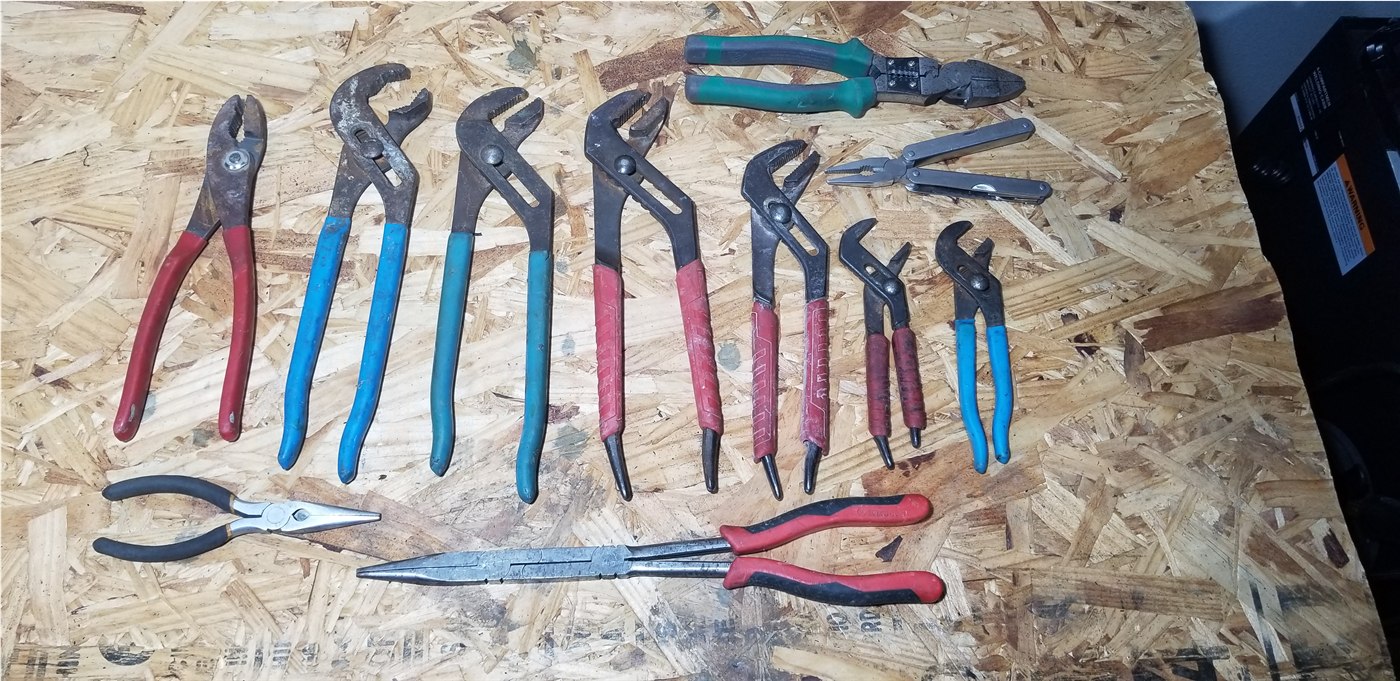
Quick answer
For most homeowners, a 10-inch pliers wrench and 10-inch water-pump pliers cover more common fixture work than a pipe wrench alone. Add a 12-inch straight pipe wrench only if the property has serviceable threaded steel or galvanized pipe and the user understands where its teeth belong. No single tool should be forced onto chrome, plastic, soft tubing, and corroded steel merely because its jaws open wide enough.

The aerator, mounting hardware and supply connections involve different access points and fasteners. A tool that fits one may not suit another.
- AeratorIdentify exposed or recessed design and the actual size.
- Mounting fastenerWorking clearance matters as much as tool length.
- Supply connectionsUse the correct fastener size and protect finished surfaces.
Who this guide is for
This guide is for homeowners assembling a compact kit for shutoff valves, faucet parts, drain nuts, supply fittings, and occasional rough plumbing. It is not a recommendation to open gas piping, dismantle a pressurized system, or apply professional-level leverage without training. When a fitting is concealed, badly corroded, or connected to fragile older pipe, a plumber is often less expensive than repairing collateral damage.
How we evaluated the fit
Selections are compared by jaw geometry, adjustment, nominal tool size, surface contact, and the connection types each design is meant to turn. This is not a hands-on durability test of the listed tools. Model details and seller bundles should be checked against the current manufacturer specifications before purchase.
Three checks that matter first
Use these checkpoints to narrow the field before comparing individual models.
Protect finished flats
Use smooth, parallel jaws on accessible hex nuts, angle-stop bodies, and finished fittings that fit within the rated capacity. Broad flat contact reduces marking compared with teeth, but the jaws still need to sit squarely and the tool must not exceed the component's safe torque.
Grip rough round parts
Water-pump pliers use serrated jaws and multiple positions to grip irregular or round work. They are valuable on rough drain components and stubborn hidden parts, but their teeth can scar chrome, brass, plastic, painted surfaces, and anything intended to remain visible.
Reserve the pipe wrench for pipe
A straight pipe wrench is engineered to bite harder as load is applied in one direction on suitable round metal pipe. That action is an advantage on threaded steel and a liability on hex nuts, copper, decorative finishes, and thin or brittle materials.
Build the kit around interfaces, not brand count
Start by listing the connections a homeowner can reasonably encounter: a hex nut beneath a faucet, a shutoff-valve body that must be held while another nut turns, a slip-joint drain nut, a round cleanout plug, or an exposed length of threaded steel. Smooth parallel jaws resemble an adjustable wrench but keep their faces aligned as the opening changes, making them versatile for finished flats. Water-pump pliers bring faster adjustment and a self-gripping geometry to irregular work. A pipe wrench supplies directional tooth engagement and leverage for traditional steel-pipe assemblies. These are complementary mechanisms, not a quality ladder in which the heaviest tool is automatically best.
Size the tool to the working space and the required jaw capacity. A longer handle may deliver more leverage, but it also makes over-torque easier and may not swing under a sink. A very large jaw on a small nut can sit off-center and round an edge. Before buying, compare the manufacturer-stated maximum opening with the actual across-flats or outside diameter of likely components, and check handle thickness for cabinet access. Add a second appropriate backup wrench when a valve or fitting must be counter-held; preventing torque from traveling into the wall is often more important than generating extra turning force.
How the three jaw styles behave
The KNIPEX pliers wrench uses smooth parallel jaw faces and a compound gripping action. It is a strong candidate for angle-stop flats, supply-line nuts, and finished hardware when the jaw capacity and access are suitable. It does not create a positive bite on round pipe, so it should not be expected to replace a pipe wrench on seized threaded steel. The KNIPEX Cobra uses serrated, angled jaws with push-button adjustment. It can hold round or irregular rough parts with less continuous hand squeezing than basic slip-joint pliers, but tooth marks are an expected risk on soft or decorative surfaces.
The RIDGID 12-inch straight pipe wrench uses a hook jaw, heel jaw, and directional loading designed around suitable metal pipe. The tool needs the correct jaw orientation and some clearance between the hook-jaw shank and pipe so it can grip as intended. It is not an all-purpose giant adjustable wrench. On a threaded pipe joint, professionals commonly use two wrenches so the fitting or upstream pipe is supported while the target part turns. Using one wrench without a backup can transfer force to a concealed elbow and create a leak inside a wall.
A practical purchase order for homeowners
Buy the smooth-jaw tool first if the expected work is mostly modern fixture service and visible finished hardware. Add water-pump pliers for drain assemblies, rough gripping, and awkward shapes. Inspect plastic slip nuts before using any metal tool; many should be hand-tightened plus only the limited adjustment specified by their manufacturer. Add a pipe wrench only when there is a known inventory of threaded metal pipe and enough access to use it correctly. A strap wrench, basin wrench, socket, manufacturer service key, or ordinary open-end wrench may still be the safer match for a specific component.
Round out the kit with a flashlight, absorbent towels, a shallow pan, noncontact voltage awareness near disposals, eye protection, and the correct replacement washers or supply connectors. The best wrench cannot compensate for a shutoff valve that does not hold or a part whose instructions prohibit reuse. Practice identifying which piece must remain stationary before turning anything. If force increases suddenly, the pipe twists, the fitting deforms, or the wall connection moves, stop. Escalating leverage is not a diagnostic method and can turn an accessible drip into a concealed break.
Options that fit this decision
These links lead to current Amazon listings. Verify the exact model and installation requirements before ordering.

KNIPEX 86 03 250 Pliers Wrench
Its smooth parallel jaws suit accessible flat-sided plumbing hardware where preserving the surface matters. The 250-millimeter class balances capacity and control for many household fittings, but buyers should compare the current jaw-opening specification with their largest nut and check cabinet clearance.
- Capacity
- KNIPEX lists a 2-inch maximum hex opening for the 86 03 250 in its US specifications. Measure the nut across its flats; the tool's 10-inch length is not its jaw opening.
- Check first
- Confirm model number, maximum parallel opening, handle style, jaw condition, and whether the component offers enough flat engagement for the tool to sit squarely.
- Best for
- Finished hex fittings, valve flats, and other accessible parallel surfaces within the tool's rated capacity.
- Skip if
- The target is round pipe, deeply recessed, too wide, structurally weak, or requires a dedicated service tool.

KNIPEX Cobra 10-inch Water Pump Pliers
The 10-inch Cobra is the rough-grip member of the kit, with serrated jaws and push-button sizing for round and irregular pieces. It adds useful purchase but can permanently mark a fitting, so its versatility depends on deliberate surface selection.
- Capacity
- KNIPEX lists separate maximum openings for the 87 01 250: 2 inches on round pipe and 1¾ inches on hex hardware in its US specifications. Match the measurement to the shape being gripped.
- Check first
- Verify opening range, adjustment function, tooth condition, available access, and whether the part may be safely gripped with serrated jaws.
- Best for
- Rough, nondecorative round or irregular components where controlled tooth engagement is acceptable.
- Skip if
- The surface is chrome, plated, painted, polished, soft, thin, plastic, or otherwise vulnerable to teeth.

RIDGID 12-inch Heavy-Duty Straight Pipe Wrench
This classic wrench is purpose-built for directional grip on suitable round metal pipe. The 12-inch size can be useful in a modest service kit, but it should be purchased for known threaded-pipe work rather than used as a substitute for smooth jaws on fixture nuts.
- Capacity
- RIDGID specifies a 12-inch nominal handle length and a 2-inch maximum nominal steel-pipe capacity for catalog number 31015. That pipe rating is a nominal size, not a measured 2-inch outside diameter. Check the manufacturer's use guide as well as handle clearance.
- Check first
- Confirm pipe diameter capacity, jaw and thread condition, handle clearance, correct wrench orientation, and a plan to counter-hold the adjoining pipe or fitting.
- Best for
- Accessible threaded steel or galvanized pipe within the manufacturer's stated capacity.
- Skip if
- The work is copper, plastic, tubing, a hex nut, a decorative fitting, or an assembly that moves inside a wall.
Frequently asked questions
Do smooth-jaw pliers replace an adjustable wrench?
They overlap on many accessible flat-sided fittings and can provide broad parallel contact. An adjustable, open-end, socket, or specialty wrench may still fit a recessed or tightly specified component better. Choose the tool that fully engages the flats without side loading.
Can water-pump pliers be used on chrome if a rag is added?
A rag does not guarantee protection and can reduce predictable grip. Use a true smooth-jaw or approved protected-jaw tool on visible finishes. If a manufacturer permits a protective interface, make sure the tool remains stable and the part can be supported.
Does every homeowner need a pipe wrench?
No. Homes with modern plastic, copper, and fixture connections may offer few appropriate uses. Buy one when there is known accessible threaded metal pipe and the user can apply counter-torque correctly; otherwise smooth jaws and water-pump pliers are more versatile.