
Short vs. Long Water Meter Keys: Reach, Leverage & Access
Water meter key length changes reach, posture, storage, and leverage, but longer is not automatically safer or more compatible. A short lid key and a long curb-valve key often perform different jobs. The right choice starts with the exact cover, valve depth, interface, and authorized shutoff route.
Quick answer
Use a compact key for a verified shallow lid-opening task. Choose a longer T-handle or curb key only when the correct valve sits below reach and its head matches the tool. Measure depth and handle clearance; never compensate for an unidentified, seized, or restricted valve by buying more leverage.
Who this guide is for
This comparison is for homeowners who have located a meter or valve box and are unsure whether a pocket-size key, moderate T-handle, or professional long key belongs in the emergency kit. It assumes the utility permits the relevant access. People who cannot clearly distinguish the meter, cover hardware, customer valve, and utility curb stop should ask for identification before choosing a tool.
How we evaluated the fit
The analysis compares listed overall length, handle design, working-end geometry, number of valve ends, storage requirements, and access limitations. It is specification-based and does not claim hands-on testing or guarantee that any length will fit the varied water infrastructure used across North Texas utilities.
Three checks that matter first
Use these checkpoints to narrow the field before comparing individual models.
Length follows the component
A five-and-one-half-inch lid key can be ideal for a cover opening while being incapable of reaching a curb valve. A sixteen-inch or longer shaft may reach the valve, but only a correctly shaped end can operate it.
Leverage can be a liability
Long handles make torque easier to apply. That is not permission to force a stuck valve. Excess leverage can damage a corroded or partially engaged component and make an emergency worse.
Access includes handle swing
A shaft may reach the valve while the T-handle hits landscaping, the box wall, or a fence. Measure the complete working envelope, not just vertical depth, and keep the work position stable.
What short keys do well
Compact meter-box keys are commonly designed around a lid opening, lift slot, or other shallow cover interface. They fit easily in a glove compartment or emergency pouch and can be convenient when the user can work from the surface without reaching into the enclosure. Their small size also reduces the temptation to apply excessive torque. However, the hand may be close to sharp cover edges, mud, insects, or hot metal, so a verified fit and safe grip remain important.
A short tool is not a reduced version of every long key. The working end may be made solely for the lid and may have no curb-valve socket. Even when it resembles a valve tool, the limited reach may require unsafe bending or reaching into the box. Select it for an identified surface task, not merely because it is compact or convenient to store. If opening the lid does not expose an authorized and serviceable household control, the tool has not completed the shutoff plan.
What longer keys change
A moderate or long shaft can reach a recessed valve while keeping hands above the box. T-handles support controlled rotation when there is clear space. Multi-end professional keys may serve two known curb-head sizes, reducing the need for adapters. Measure from the normal standing or kneeling position to the valve head and compare that distance with usable shaft length, not just the product's overall dimension. The end must seat fully before any turning force is applied.
Longer tools require more storage and a clearer working area. A wide handle can be blocked by a wall, shrubs, parked vehicle, or narrow box opening. The added mechanical advantage can hide partial engagement; a user may feel resistance without realizing the tool is slipping off the valve. If normal, controlled force does not move a confirmed valve, stop. A utility representative or plumber can determine whether the component is restricted, seized, damaged, or simply not the valve you should operate.
Measure before selecting a length
Record cover interface, box opening dimensions, depth to the top of the valve, curb-head size or shape, obstructions, and available handle radius. Confirm whether the valve rotates a quarter turn or another amount through authoritative guidance; do not infer movement from a tool listing. Account for soil or debris that may change the effective depth. If the box is flooded, unstable, occupied by pests, or close to traffic, leave it alone and call the appropriate service provider.
A two-tool kit can be cleaner than one compromise: a small verified lid key plus a correctly sized valve key. Label each purpose so a family member does not use the cover tool as a lever. Store both with gloves, a flashlight, and contact numbers. Also keep the customer-side house shutoff accessible and serviceable. A well-maintained interior or exterior house valve may provide faster control than any meter-box procedure.
Confirm access rules and tool geometry
Water-meter ownership, access, and shutoff rules vary by utility. The City of Frisco's official leak manual explains its meter-box layout and emergency shutoff guidance, while its current Public Works guidance directs residents to call for help when the shutoff cannot be identified or accessed. For the professional Reed option below, compare the exact catalog number and head configuration with Reed's official valve-key matrix. Confirm your own utility's rules and never use added handle length to force a seized or uncertain valve.
Options that fit this decision
These links lead to current Amazon listings. Verify the exact model and installation requirements before ordering.

EFIELD Water Meter Box Key, Brass, 5.5-inch
The compact five-and-one-half-inch form is best considered for a verified meter-box lid interface. Brass construction and small storage size are secondary to working-end fit and safe hand clearance. It should not be expected to reach a deeply recessed curb valve unless the current specifications explicitly support that task.
- Check first
- Confirm the lid opening geometry and that the short body leaves enough room to grip without reaching into an unsafe enclosure.
- Best for
- A known compatible cover-opening task where portability matters more than valve reach.
- Skip if
- The emergency plan requires operating a valve below the lid.
Eapele 16-inch Water Meter Key with T-Handle
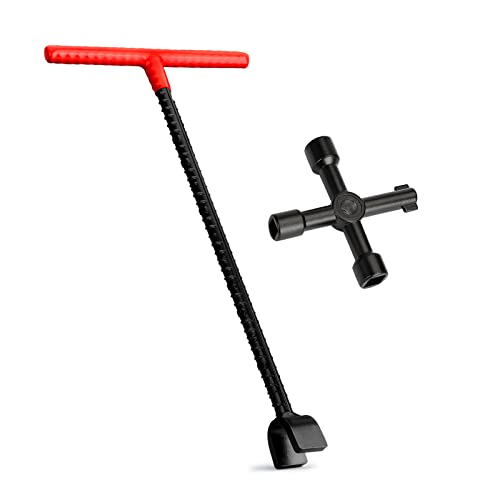
A sixteen-inch shaft sits between pocket-size lid tools and larger professional keys. The T-handle can provide controlled access to a compatible moderate-depth valve, and the listed cross-key feature may serve other verified interfaces. Confirm both the curb end and the cross-key dimensions rather than assuming versatility equals fit.
- Check first
- Measure depth to the valve, the required end, and the unobstructed radius for the T-handle.
- Best for
- A moderate-depth authorized box with a confirmed compatible valve head.
- Skip if
- Sixteen inches does not reach comfortably or the handle cannot rotate in the available space.

Reed Tool VK3CK1CK2 Main Valve Key
This longer, focused valve tool is described with dedicated one-inch and two-inch curb-key ends. It may suit a known deep or professional-style interface where one of those sizes is confirmed. It is more specialized than a compact lid key and should be stored and used as a valve tool, not a general pry bar.
- Check first
- Confirm valve-head size, required reach, tool storage, utility permission, and space to control the tool without overtorquing.
- Best for
- Verified one-inch or two-inch curb-valve heads that call for a substantial dedicated key.
- Skip if
- The component is unidentified, stuck, utility-controlled, or accessible with a simpler customer-side shutoff.
Frequently asked questions
Is a longer water meter key always better?
No. It may improve reach but add storage and clearance problems, and it can apply more torque than a compromised valve should receive. Match length and end geometry to the known task.
Can a short lid key turn the shutoff valve?
Usually that is a separate question. Some short tools are intended only for cover access. Confirm the manufacturer's stated use and the actual valve depth and interface.
How do I measure for a curb key?
Measure safe vertical reach to the valve head, identify its size and shape, and check the space required for handle rotation. Seek professional identification if any detail is unclear.