
Water Meter Box Key vs. Shutoff Key: What Tool Do You Need?
A plumber explains the difference between a water meter box lid key and a water shutoff key, how to choose the right tool, and when to call the utility.
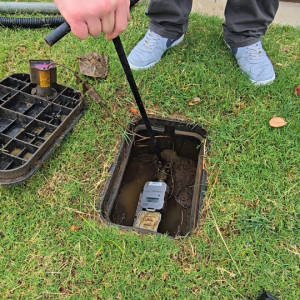
Dealing with a leak now? Read the emergency shutoff guide or call (972) 595-4431.
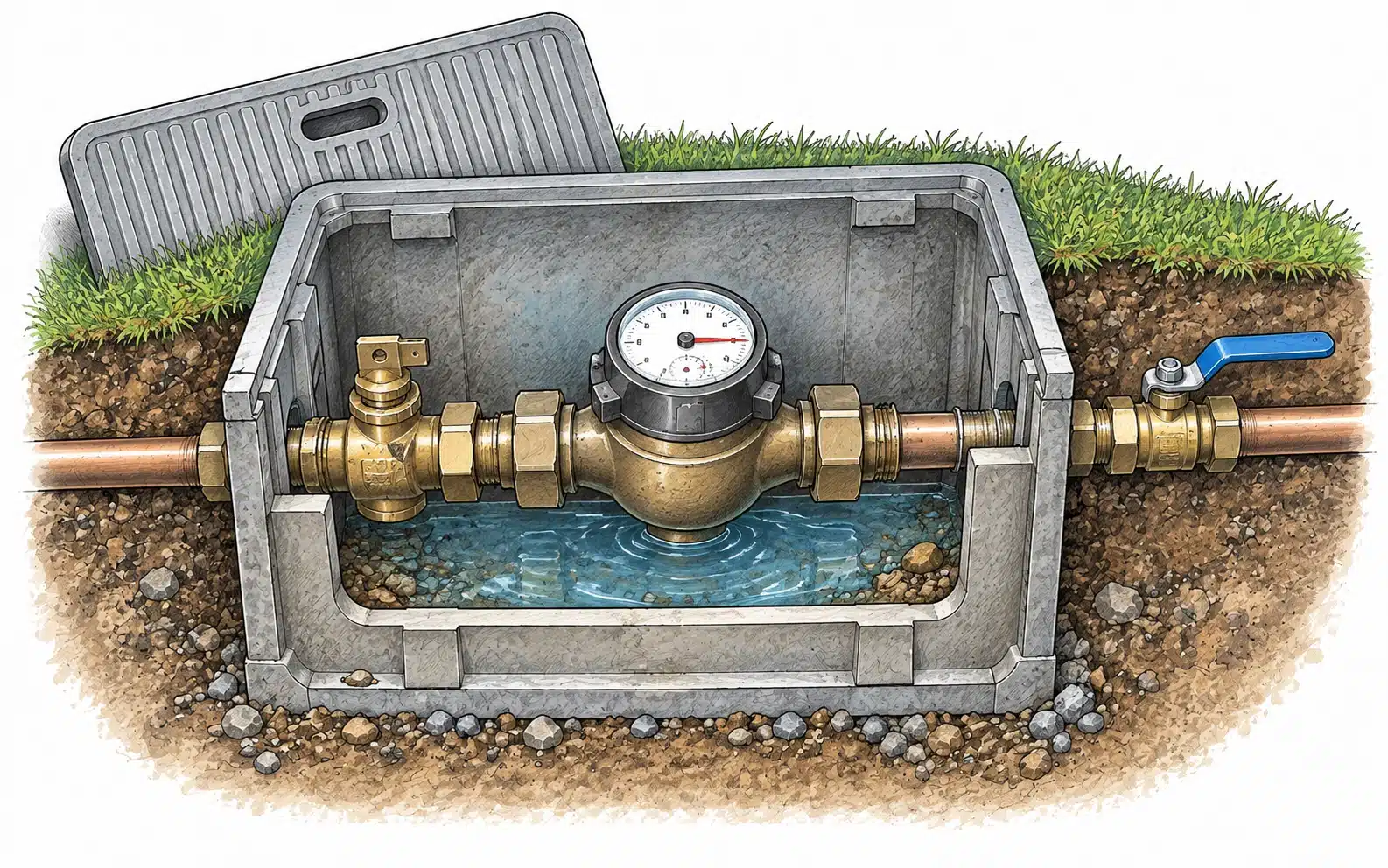
The lid, meter-side valve and customer shutoff are separate items. Identify the actual parts and local utility rules before deciding what belongs in the kit.
- Meter-box lidA lid key and a valve key do different jobs.
- Meter-side valveUtility rules and valve shape must be confirmed.
- Separate shutoffThe customer shutoff location and design vary.
Quick answer
A water-meter box key opens the lid. A water shutoff key reaches and turns the valve inside the box. Some combination tools do both jobs, but the right choice depends on your lid, valve shape, box depth, and local utility rules.
When water is spraying from a broken supply line, the tool you need is not the one you want to research for the first time. This guide explains the difference between a meter-box lid key and a shutoff key, how to choose a practical option, and when to stop and call your water utility or a licensed plumber.
Sergeant Plumber Corp. is a veteran-owned North Texas plumbing company. The goal here is simple: help homeowners, renters, property managers, and builders prepare before a leak turns into expensive water damage.
Watch: Know your shutoff before a leak
This 34-second overview uses our field footage to show why a meter-box lid key and a valve key are not interchangeable.
- Identify your customer-owned main shutoff first.
- Check fit and your utility’s rules before using a tool.
- Never force a stuck valve or pull on attached meter wires.
Preparation overview only. Systems and utility rules vary. Renters should ask their property manager for the approved procedure.
Read the video transcript
Could you stop a leak quickly? Find your home’s main shutoff before an emergency. A lid key opens the meter box. A shutoff key turns the valve. They are not always the same tool. Start with your customer-owned valve, and follow your utility’s rules. Never force a stuck valve or pull on meter wires. Renting? Ask your property manager for the approved procedure. Find the full guide at Sergeant Plumber Corp dot com.
Original company footage with AI narration and on-screen captions.
Water meter box key vs. shutoff key
| Tool | What it does | When you need it |
|---|---|---|
| Meter-box lid key | Releases a lock, latch, or slot in the meter-box lid | When the lid cannot be safely lifted by hand |
| Water shutoff key | Reaches the curb-stop or meter valve and provides leverage to turn it | When the valve is below grade or difficult to reach |
| Combination key | Includes a lid-opening end and a valve-turning end | When both ends match your local meter setup |
The names are often used loosely online, which causes confusion. A product called a “meter key” may open only the lid, turn only the valve, or combine both functions. Look at the working ends of the tool—not just its product title.
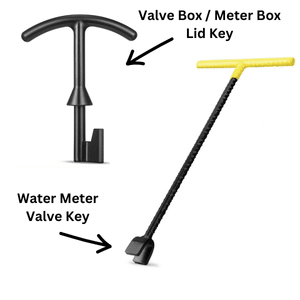
If standing water keeps you from identifying the equipment, start with our water meter box full of water guide. Do not reach blindly into a flooded box. For a separate indoor warning plan, learn where to place water leak detectors; a sensor and a shutoff tool serve different purposes.
What tool shuts off water at the meter?
For many North Texas meter boxes, the valve is operated with a long T-handle or curb-style shutoff key. The forked or slotted end fits over the valve head while the handle gives you controlled leverage from above the box. A deeper box generally needs a longer tool.
However, you should first locate the customer-owned main shutoff for the building. It may be near the foundation, in a garage, in a utility closet, or close to where the water service enters the structure. Many utilities prefer customers to use that valve before operating a utility-owned meter valve.
Before touching the meter
- Check your utility’s rules; some cities restrict operation of the city-owned shutoff.
- Renters should contact the property manager or landlord unless there is an immediate emergency and local instructions say otherwise.
- Lift the lid carefully. Meter-reading wires may be attached, and boxes can contain insects, snakes, mud, or standing water.
- Never force a stuck or corroded valve. A broken valve can turn a manageable leak into a larger emergency.
Do you need both tools?
You need a way to open the box and a way to turn the valve. Whether that means one tool or two depends on the box at your property.
- Choose a combination key when its lid end and valve end both match your meter box. It is compact and easier to keep in an emergency kit.
- Choose separate tools when your lid has a special lock, the valve is unusually deep, or the all-in-one tool does not fit securely.
- Choose a long-reach shutoff key when the valve sits well below grade. Measure the depth before buying.
How to choose the right water meter key
1. Inspect the lid without forcing it
Look for a small rectangular slot, pentagon-style lock, latch, or lift point. Do not pry against plastic components or pull hard if a wire appears connected to the lid.
2. Identify the valve head
Common meter shutoffs have a raised rectangular or wing-shaped head that a slotted key fits over. Other systems use different valves or should be operated only by utility personnel. If you cannot clearly identify it, stop and ask the utility.
3. Measure the box depth
Measure from grade level to the valve and allow enough length to keep your hands safely above the opening. A compact tool may work in a shallow box; a deeper curb stop may need a 28-, 36-, or longer key.
4. Confirm the local rules
Municipal rules are not identical. Some utilities explain how customers can use a meter key; others direct customers to use the private-side shutoff or call the city. Builders and property managers should document the approved shutoff location and tool for every property before turnover.
Compare water meter tool options
Affiliate disclosure: As an Amazon Associate, Sergeant Plumber Corp. may earn from qualifying purchases. If you buy through a link below, Sergeant Plumber Corp. may earn a commission at no additional cost to you. Recommendations are based on the job each tool is designed to do; always confirm fit and local rules before purchasing.
These options are researched from manufacturer and seller information, not hands-on reviews of these specific products. Compare your lid shape, valve head, and box depth before buying; follow your utility’s rules.

Pentagon-style lid option
The VIDABTE MKF2 is listed as a compact key for pentagonal meter-box and curb-box covers. Consider it only when its working end matches your lid hardware. Do not buy it as a substitute for a long-reach shutoff key.

Long-reach T-handle option
A longer T-handle is easier to use when the valve sits deeper in the box. The lid-opening feature still must match your specific cover, and extra length is not helpful if the valve end is the wrong size. Before buying, check reach, working-end fit and handle clearance, then confirm those measurements against the exact product listing.

Simple lid-key option
If you already have the correct shutoff tool and only need to release a compatible meter-box lid, a standalone lid key may be the cleaner choice. This is not a replacement for a valve key.
Advice by property type
Homeowners
Locate both the private main shutoff and the meter box. Test the private valve carefully during normal conditions, label it, and keep the correct tool where an adult can reach it quickly. Do not wait for a burst pipe to learn which valve controls the house.
Renters
Ask the landlord or property manager where the approved shutoff is and who to call after hours. In apartments and shared buildings, one valve may affect other units. Keep the emergency number with your lease documents and in your phone.
Builders, landlords, and property managers
Add the shutoff location, valve type, required tool, utility contact, and after-hours procedure to the property handoff packet. Photograph the valve while access is clear. A five-minute orientation can prevent confusion during an emergency.
Frequently asked questions
Are all water meter keys the same?
No. Lid locks, valve heads, box depths, and utility rules vary. Confirm the shape and measurements at your property before buying.
Can I use pliers or an adjustable wrench?
A wrench may fit some accessible private shutoff valves, but it can slip or damage a recessed meter valve. Use the correct tool and do not force a valve. If it will not move with moderate, controlled pressure, call the utility or a plumber.
Which direction turns the water off?
Many quarter-turn meter valves are off when the valve indicator is perpendicular to the pipe, while multi-turn valves commonly close clockwise. Designs vary, so follow your utility’s instructions and never keep turning past a firm stop.
What length water meter key should I buy?
Measure from the top of the box to the valve. Choose enough length to engage the valve fully while keeping your hands above the opening. Common retail lengths include roughly 28, 36, and 60 inches, but fit matters more than the label.
Should a renter turn off water at the meter?
Usually the first step is to contact the landlord, property manager, or emergency maintenance line. Shared systems and local rules can make meter operation inappropriate. Ask for the approved procedure before an emergency occurs.
Know your shutoff before you need it
Read our step-by-step emergency water shutoff guide. If the valve is damaged, buried, leaking, or will not move, Sergeant Plumber Corp. can help you identify the safest next step.
Getting prepared? Open our free one-page home plumbing plan (PDF). Print it and record your shutoff location, utility number, and kit checklist. No email required; opens in a new tab.
Sources and local guidance
- City of Frisco FIX-A-Leak Manual
- Austin Water cold-weather and shutoff guidance
- City of Rowlett meter-box guidance
- City of Bedford water meter shutoff assistance
- City of Tigard instructions and stuck-valve warning
- City of Forney renter and shutoff guidance
General educational information only. Water systems and utility rules vary. When in doubt, contact your water provider or a licensed plumber.
Looking for more practical answers? Browse our Plumbing Guides & Tool Advice library for homeowner and renter guidance.