
Drain-fit buying guide
Shower and Tub Drain Hair Catchers: Match the Catcher to Your Drain
The useful hair catcher is the one that fits the actual drain, stays where water reaches it, preserves acceptable flow, and gets cleaned often enough to keep working. Start with the drain and stopper—not a “universal” label.
Compare the domed OXO option Start with your drain measurements
Identify the drain before choosing the catcher
“Tub drain” and “shower drain” describe fixtures, not one universal piece of hardware. Photograph the drain from above, then identify the geometry without taking apart anything that is stuck or uncertain.
Bathtub with a raised stopper
Toe-touch, lift-and-turn, push-pull, and some pop-up stoppers occupy the center of the drain. A domed surface catcher may fit around the raised stopper without requiring removal.
Bathtub with an open drain
A trip-lever plunger may control water inside the overflow assembly while leaving the drain opening clear. An in-drain insert may be possible if the opening, crossbars, and depth match.
Round shower grate
A flat surface screen can sit over the existing grate if its footprint covers the water path and the floor lets its rim rest securely. An under-grate insert requires exact clearance and approved access.
Square or linear shower drain
These need a catcher designed for the visible cover, internal basket, or channel system. A round in-drain product should not be assumed to fit because the hidden outlet pipe is round.
Recessed or uneven surface
A wide screen may bridge over the recess and let hair bypass underneath. Measure the flat contact area, curb, grout, tile texture, and floor slope.
Damaged or altered drain
Missing crossbars, loose trim, silicone repairs, sharp edges, cracks, corrosion, or a moving drain body change the task from accessory selection to diagnosis and repair.


The strainer is only the entrance. A concealed trap and bends can limit access and affect which inspection or cleaning approach makes sense.
- Strainer and accessible residueHair and film near the cover can need cleaning.
- Water in the P-trapRetained water helps keep sewer gas out of the room.
- Drain armNormal drainage alone does not identify the source of an odor.
Illustrated layout for orientation. Components and routing vary by home; this is not an installation plan.
Five hair-catcher formats and their tradeoffs
| Format | Works when | Main limitation |
|---|---|---|
| Flat surface screen | A shower floor or flat tub area gives the rim enough contact and the screen covers the full water path | Can slide, curl, rock on grout or texture, bridge a recess, or become a trip/comfort issue |
| Domed surface catcher | A raised stopper or drain feature needs clearance beneath the dome and the base can sit flush around it | Needs enough outside diameter and height; hair may bypass if the rim lifts or the surface is uneven |
| In-drain mushroom or cylinder | The clear opening diameter, depth, crossbars, stopper function, and product adapter match | May require stopper or grate removal, can interfere with tub filling, and hides captured material until removed |
| Replacement grate with basket | The replacement cover dimensions, screw spacing or snap fit, drain body, and basket clearance are confirmed | “Shower drain size” may refer to the pipe, opening, basket, or trim diameter; a near match can still be wrong |
| Two-in-one stopper and catcher | A bathtub needs both water retention and hair capture and the insert seals and drains correctly in that opening | One product must perform two functions; stopper seal, control feel, flow, depth, and retrieval all need verification |
Current manufacturer catalogs illustrate why format matters. OXO’s silicone shower-and-tub protector uses a weighted domed surface design intended to clear flat or pop-up drains. Danco offers both surface products and a shower cover with a detachable basket, while TubShroom separates its tub and stand-alone-shower products by the intended drain opening and placement. These are manufacturer-described examples, not test winners.
Match the catcher to the real bathroom scenario
| Drain scenario | First format to evaluate | Verify before buying |
|---|---|---|
| Flat round shower grate on smooth tile or pan | Wide, low-profile surface screen | Overall diameter, flat contact area, floor slope, grate height, non-slip behavior, and foot clearance |
| Round shower grate with removable cover and clear space below | Surface screen or manufacturer-listed under-cover insert | Cover removal, screws, clear opening, depth, basket clearance, and ability to reinstall the cover securely |
| Tub with raised push-button or lift-and-turn stopper | Domed surface catcher that clears the fully open stopper | Dome height, outside footprint, stopper travel, smooth contact surface, and whether the tub still drains and fills as intended |
| Tub with clear opening and removable stopper | Correctly sized in-drain catcher or two-in-one catcher/stopper | Inside diameter, usable depth, crossbars, adapter, retrieval grip, and need to retain bath-stopper function |
| Linear or square shower drain | System-specific basket or surface screen made for the cover geometry | Channel/cover model, lift-out access, basket location, perimeter gaps, flow path, and cleaning method |
| Already slow with no catcher installed | Neither—diagnose or clear the existing restriction first | Whether the slowdown is local hair, soap buildup, a trap/branch restriction, or a larger drainage problem |
Danco’s current surface-screen specifications show both ends of the fit spectrum: one bathtub design attaches to supported stopper styles and works best on a flat, crack-free, non-textured surface, while a separate shower screen is sized to sit on top of an existing cover. That is why measuring only the hole can miss the surface condition that keeps the product in place.
One domed option to compare after measuring
OXO Good Grips Silicone Shower & Tub Drain Protector, model 13140900. OXO describes a weighted silicone-and-stainless-steel dome for flat and pop-up drains and lists dimensions of 4.5 inches by 1.75 inches. Those are overall product dimensions, not a promise of usable clearance over every stopper.
- Consider it: when a surface dome can cover the drain, clear the fully open stopper and rest evenly around the water path.
- Skip it: when the edge would bridge a recess, rock on grout, interfere with feet or leave a bypass gap; also skip shopping while the bare drain is already slow.
- Confirm the listing: choose the silicone shower-and-tub protector, not an OXO sink strainer, flat shower cover or solid tub stopper.
Manufacturer-verified design and dimensions; we have not tested this product’s capture rate or flow. Paid link: Sergeant Plumber Corp. may earn a commission from qualifying purchases.
Check the OXO domed protector on Amazon ↗
Review the measuring checklist before ordering. After fitting, use the flow check rather than assuming a good-looking fit is enough.
Measure the drain without creating a repair
Choose the measurement path for the catcher format. Surface covers and inserts do not need the same checks.
Surface screen or dome
Compare the cover or flange width, the flat seating area, and the stopper’s height when fully open. Check whether a recess, grout or slope would leave a gap under the rim. Leave the existing stopper and grate in place for these surface measurements.
In-drain insert or replacement basket
Also compare the clear opening, usable depth, crossbars and other internal obstructions. Steps 4–5 below apply to this format. Only measure inside when the drain’s instructions permit access and the parts release normally.
- Clean and photograph the area. Remove loose hair and soap film with a safe non-scratching method so the rim, cover, stopper, screws, and defects are visible.
- Confirm the drain works first. Run water with no new catcher installed. Record whether water clears normally, pools immediately, gurgles, or backs up elsewhere.
- Measure the visible footprint. Record the outside width of the cover or flange, the flat contact area around it, and the width of any recess, curb, grout line, or texture.
- For an insert or replacement basket, measure the clear opening only when safe. If an existing stopper or grate comes out normally according to its instructions, measure the inside opening across the center. Do not count the decorative flange as the opening.
- For an insert or replacement basket, record depth and internal obstructions. Note crossbars, linkage, screws, drain-body steps, nearby walls, and the usable depth before an in-drain catcher would bottom out.
- Operate the stopper. Measure it fully open and closed. Decide whether the tub still needs to hold water and whether the catcher must remain installed during a bath.
- Compare every dimension to one exact product. Confirm inlet/opening range, overall width and height, adapter use, drain type, exclusions, cleaning access, and return policy from current documentation.
If the bare drain works normally and a surface dome is appropriate, compare the OXO option with your measurements. Listed overall dimensions do not guarantee clearance above your stopper.
A fit check must include water flow
A catcher can match the ruler and still fail in use. Perform the product’s approved setup and check these conditions during normal shower flow:
- The rim stays in contact instead of floating, folding, or sliding away from the water path.
- Water does not begin pooling around feet or rising in the tub because the openings are undersized, blocked, or already loaded with hair.
- Hair reaches and remains on the catcher instead of flowing under a lifted edge or around an uncovered side.
- The grate, stopper, and catcher do not rub, bind, prevent full opening, or leave sharp or unstable edges.
- The catcher can be removed without reaching into sharp crossbars or dropping captured hair back into the pipe.
- The tub can still hold water if that function is required, using only the configuration the product allows.
Umbra’s current Flex product is an example of a combined catcher/stopper with a push control. OXO’s dome is a surface-cover example. TubShroom’s tub and shower products are in-drain examples with different intended openings. The right category comes from geometry and use—not which shape looks most convincing online.
Cleaning frequency is part of product fit
A product that catches hair but is unpleasant or awkward to clean may be neglected until it restricts the drain. Build the maintenance decision into the purchase:
- Remove captured hair before flow slows. Heavy shedding, pets, multiple users, and long hair may require cleaning after every shower; lighter use may allow a longer interval.
- Put hair in the trash. Do not peel it off and rinse it back into the same drain.
- Clean the catcher as directed. Follow material-specific instructions for silicone, plastic, stainless steel, coatings, suction surfaces, and removable baskets.
- Clean the contact area. Soap film under a suction cup, weighted rim, or silicone edge can let water and hair bypass.
- Inspect for damage. Replace a catcher that has torn, curled, corroded, lost its grip, developed sharp edges, or no longer fits.
- Recheck the bare drain. If flow stays slow after the catcher is removed and cleaned, the restriction is no longer a product-maintenance problem.

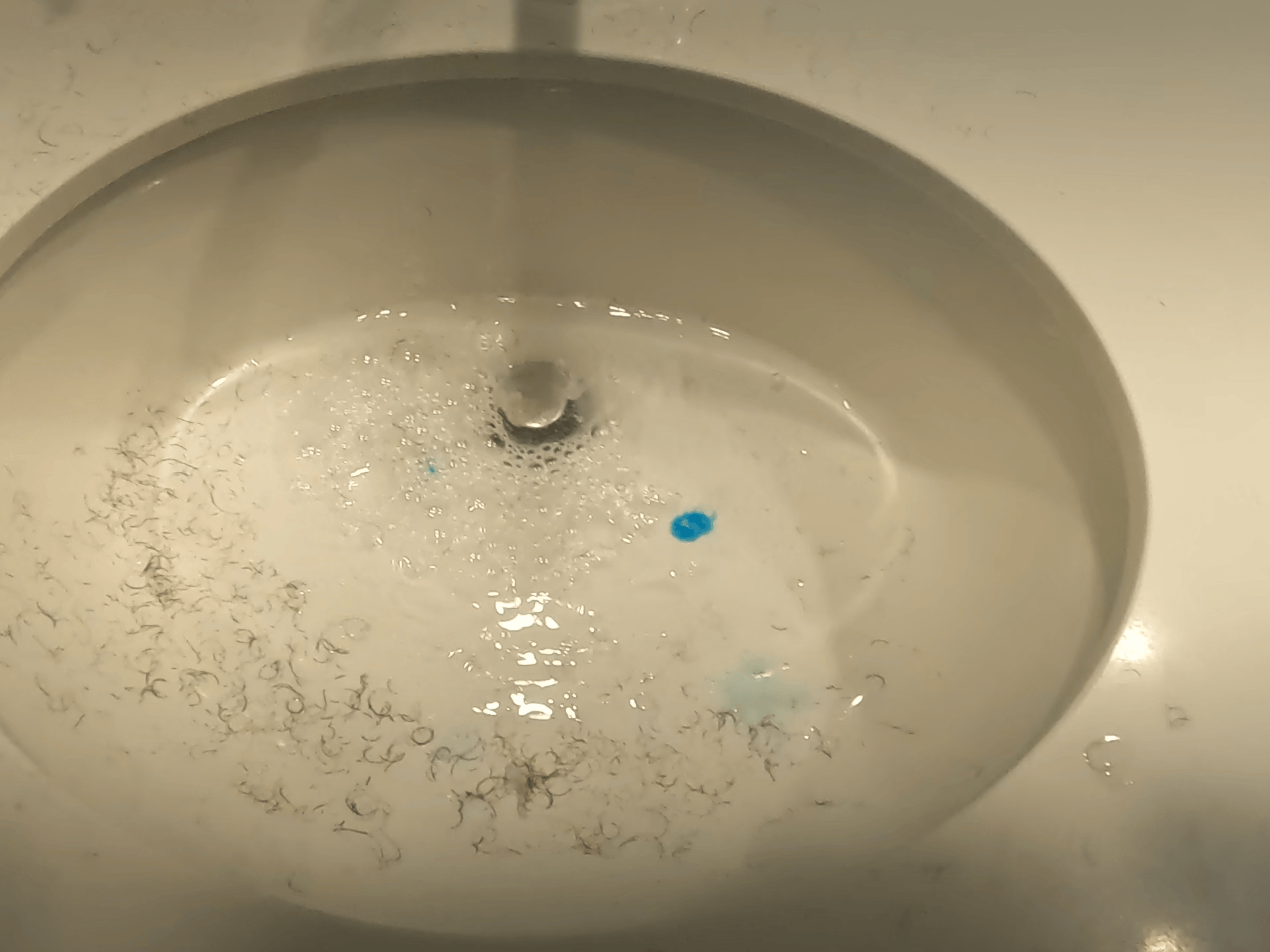
When a hair catcher is no longer the answer
- The tub or shower is slow before the catcher is installed.
- Water backs up in another fixture or more than one drain is slow.
- There is recurring gurgling, a sewage odor, dirty backup water, or a previous clog that quickly returned.
- The drain body, stopper, grate, overflow, or surrounding seal is loose, cracked, corroded, or leaking below the fixture.
- Mechanical clearing meets a hard obstruction, roots, mortar, damaged piping, or an uncertain object.
- Removing the drain or stopper would require force, cutting, heat, or access beneath the tub.
A hair catcher is preventive. It cannot retrieve material already downstream, repair damaged piping, correct a poorly pitched line, or diagnose a branch or main-line restriction. For an existing stoppage, the toilet auger versus drain snake guide explains why the tool must match the fixture and obstruction.
If a tub or shower stays slow with the catcher removed, repeatedly backs up, leaks below the fixture, has damaged hardware, or cannot be safely accessed, Sergeant Plumber Corporation can evaluate the drain and recommend the appropriate clearing or repair.
Call (972) 595-4431Text Sergeant PlumberSchedule Service
What a future “best” ranking would need to test
This guide does not rank products because the candidate designs have not been tested side by side by Sergeant Plumber. A defensible future comparison should use the same drain fixtures, hair load, water flow, cleaning method, and scoring rules for every candidate.
| Test criterion | What to record |
|---|---|
| Measured fit | Opening, cover, recess, stopper, depth, adapters, and which drain configurations accept or reject the product |
| Hair capture | Controlled hair amount retained versus material visibly passing or bypassing the catcher |
| Flow retention | Drain time or water depth when clean and after repeat hair loads, compared with the same bare drain |
| Movement | Sliding, lifting, curling, floating, stopper interference, and stability during repeated normal showers |
| Cleaning | Removal time, contact with debris, trapped residue, dropped hair, drying, and reinstallation |
| Bathroom use | Foot comfort, trip or sharp-edge concerns, appearance, bath-filling function, and access for every household user |
| Durability | Changes in grip, shape, coating, corrosion, staining, tearing, and fit over a declared test period |
Manufacturer-verified examples—not recommendations
Product families worth evaluating after measuring include wide surface screens, domed surface catchers, in-drain tub inserts, under-grate shower inserts, replacement shower covers with baskets, and two-in-one tub stopper/catchers. The OXO option above is a specification-based comparison, not a tested winner. Measure your drain against the exact product before purchasing; none of these formats is universal.
Hair-catcher questions homeowners ask
What hair catcher fits a pop-up tub stopper?
Start with a surface catcher that clears the stopper when it is fully open. Check both the height above the stopper and the flat contact area around the drain. For example, OXO describes its domed protector for flat and pop-up drains; that does not make it a guaranteed fit for every stopper or tub surface. Do not force out a stuck stopper to make an insert fit.
Can I use a round hair catcher in a linear shower drain?
Match the drain system, not just the outlet pipe diameter. Start with the drain manufacturer’s compatible strainer or basket and its cleaning instructions. Schluter lists a hair-strainer accessory for KERDI-LINE-VARIO, illustrating why a system-specific option may be available. It is not a fit claim for other linear drains. A catcher still needs accessible, regular cleaning.
Why does my shower drain slower with a hair catcher?
Check whether captured hair needs removing, the catcher sits incorrectly, or its openings are restricting the water path. Clean and reinstall it as its manufacturer directs; do not add another layer of mesh to solve poor flow. If a normally removable catcher is clean and the drain remains slow with it removed, investigate the existing drainage problem before buying another accessory. Use the fit-and-flow checklist above, and get plumbing help for recurring backup or damaged hardware.
Continue the drain-care path
Sources
- TubShroom product FAQ and drain measurement guide — intended tub/shower openings, in-drain placement, and measurement method.
- OXO Silicone Shower & Tub Drain Protector — domed surface format, intended drain styles, materials, and dimensions.
- Danco Bathtub Hair Catcher with Suction Cup, surface shower strainer, and shower cover with basket — surface/stopper requirements, trim and basket dimensions, and product-specific exclusions.
- Umbra Flex Drain Plug & Hair Catcher — combined stopper/catcher format and stated dimensions.
Manufacturer sources and the OXO purchasing option reviewed September 28, 2026. Product specifications and availability can change. Measure the actual drain, check the exact manufacturer’s current fit requirements, and treat merchant performance statements as untested until a documented comparison is completed.