
How to Shut Off Your Water in an Emergency
If water is leaking inside your home, close the nearest working fixture shutoff first. If the leak continues, you cannot identify its source, or the local valve will not close, shut off the home’s main water supply. Use the shutoff at the water meter only when your local water provider allows it and you can reach and operate it safely.
Do not waste time diagnosing a hidden leak while water is still damaging the property. Stop the flow first. Then determine what failed.
Call or text Sergeant Plumber Corporation at (972) 595-4431 to request service. Availability varies by location and schedule.
Call Sergeant PlumberText Sergeant Plumber
Stop immediately if the area is unsafe
Water and damaged building systems can create hazards more serious than the plumbing leak itself:
- Electricity: Do not step into standing water to reach a breaker, appliance, outlet, or shutoff valve. The CDC advises against turning electrical equipment on or off while standing in water. Leave the area and contact a qualified electrician or emergency services when there is an immediate danger.
- Sagging ceiling: Stay out from beneath a wet, bulging, or damaged ceiling.
- Hot water or steam: Do not reach through water hot enough to burn you. Keep away from a leaking water heater or hot-water connection if you cannot approach it safely.
- Sewage or contaminated water: Avoid contact and keep people and pets away.
- Gas odor or hissing: Leave the building without operating switches or creating a flame. Contact the gas utility or emergency services from a safe location.
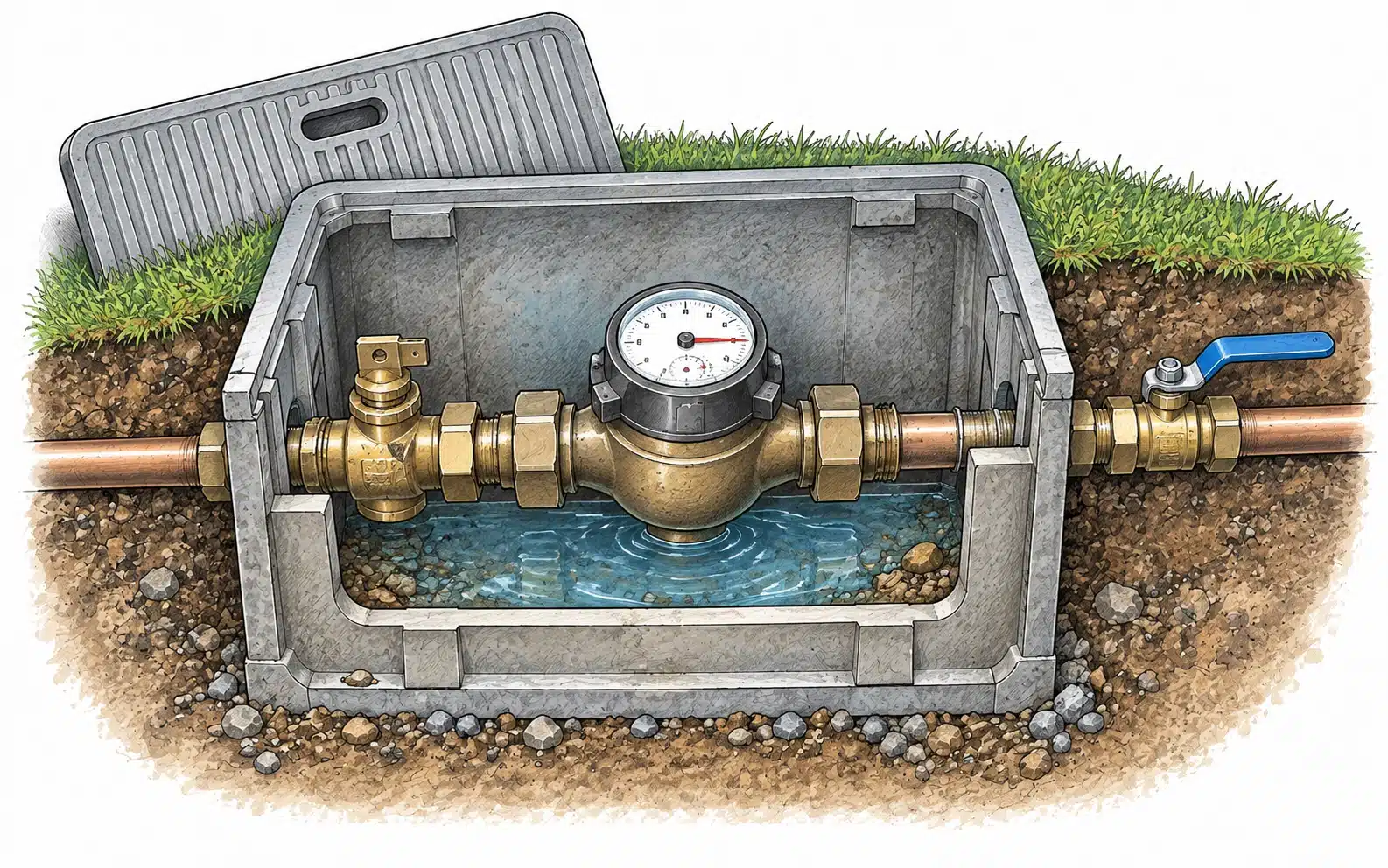
Use this illustrated layout to recognize the separate parts. The safe shutoff choice depends on your home’s layout, the condition of the valve and utility permission.
- Meter-box lidA lid key and a valve key do different jobs.
- Meter-side valveUtility rules and valve shape must be confirmed.
- Separate shutoffThe customer shutoff location and design vary.
The three-level water shutoff decision
| What is happening? | First action | If that does not stop it |
|---|---|---|
| A toilet, sink, refrigerator, dishwasher, or washing-machine connection is leaking | Close that fixture’s supply valve or valves | Close the whole-house main |
| An outdoor faucet or irrigation pipe is leaking | Close the dedicated isolation valve if you can identify it | Close the whole-house main |
| Water is coming through a wall, floor, or ceiling | Close the whole-house main | Contact a plumber; call the utility if the main will not close |
| A leak is in the yard near the service line or meter | Close the customer-side main if it is accessible | Contact the utility and a plumber |
| You cannot identify the source | Close the whole-house main | Contact a plumber for diagnosis |
1. Close the nearest fixture shutoff
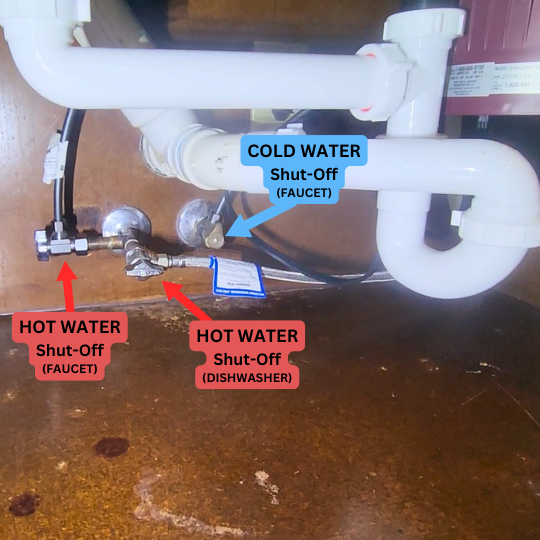
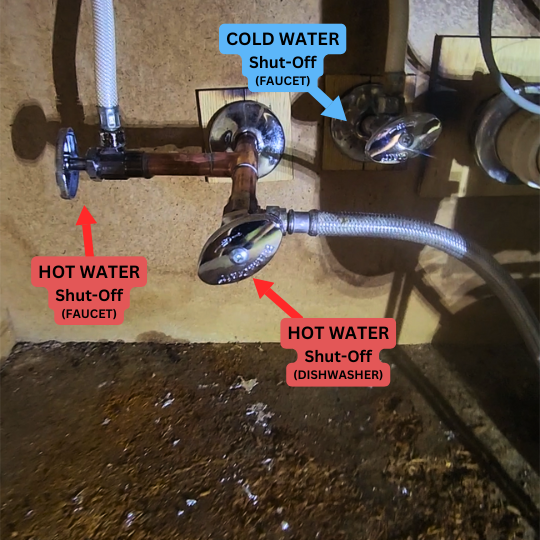
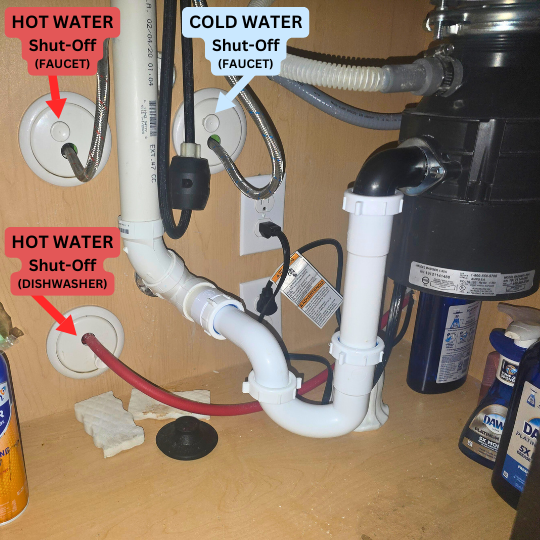
Using a local valve can stop one leaking fixture while leaving water available to the rest of the home. Common locations include behind a toilet, beneath a sink, behind a washing machine, near a refrigerator connection, under the kitchen sink for some dishwashers, and on the cold-water line entering a water heater.
On a typical quarter-turn valve, the handle is parallel with the pipe when open and perpendicular when closed. A typical multi-turn valve closes clockwise. Push-pull valves vary, so use their markings or instructions rather than guessing.
2. Close the whole-house main shutoff
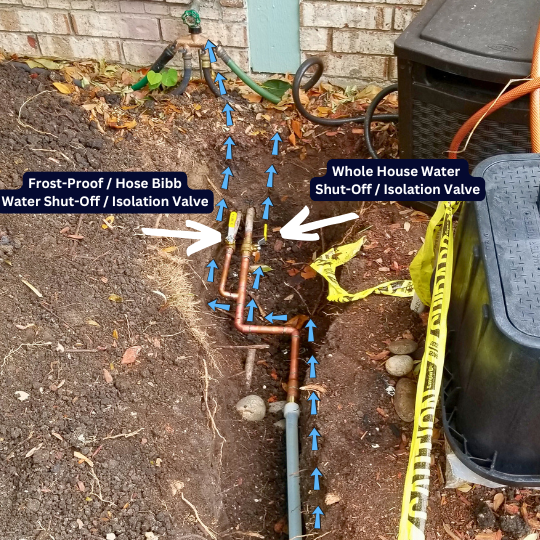
The whole-house valve is usually the best next step when the leak is concealed, affects more than one fixture, or cannot be isolated locally. Depending on the home, the main may be in a front flower bed or valve box near the house, in the garage, on the side of the home, near a water manifold, in a basement or crawlspace, or between the meter and the point where the service line enters the home.
Look for a valve on the main cold-water line. A lever-style ball valve normally closes with a quarter turn until the handle is perpendicular to the pipe. A wheel-style valve normally closes clockwise until it is snug. Stop if the valve is buried, badly corroded, broken, leaking around the stem, or requires unusual force.
3. Use the meter shutoff only when permitted and safe
The water meter and its shutoff equipment may belong to the local utility. Rules and meter designs are not identical from one city to another. Check your water provider’s guidance before relying on the meter valve, and call the provider when you are unsure.
Before opening a meter box
- Use a flashlight and inspect the box from above.
- Watch for ants, spiders, snakes, other animals, sharp debris, and standing water.
- Do not reach blindly into the box.
- Do not pull, cut, or disturb meter-reading wires or sensors.
- If the box is flooded, the meter is damaged, or water is spraying near the meter, stop and contact the utility.
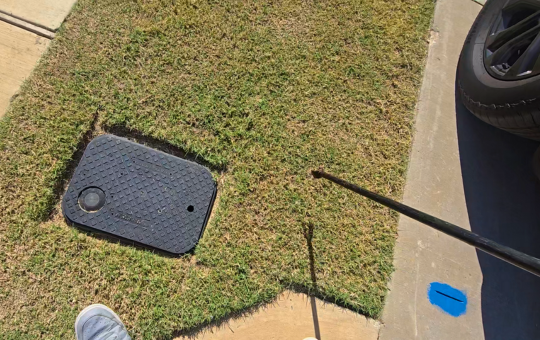
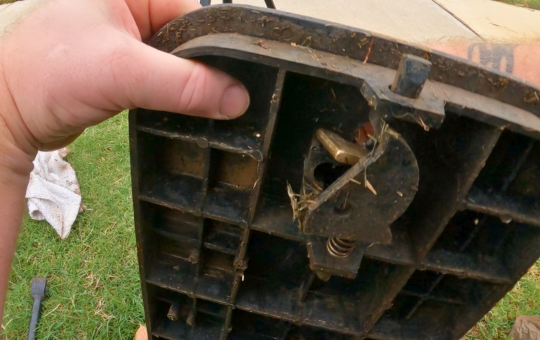
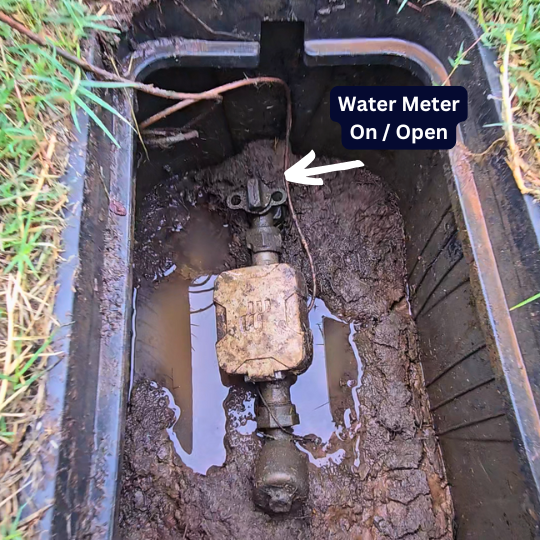
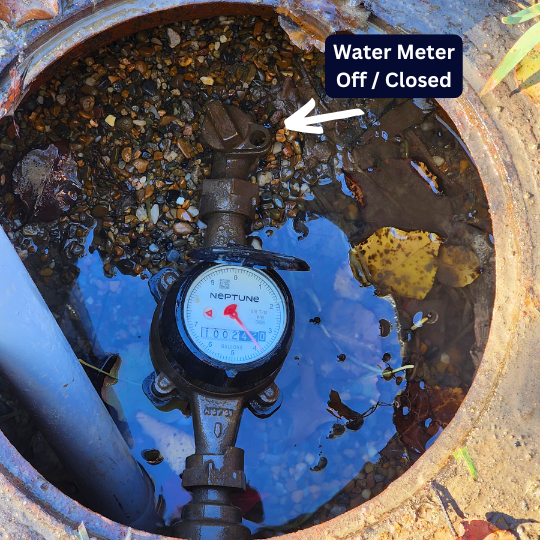
Use the correct lid key rather than prying the cover open. Meter lids can be heavy and may have wires attached. Place the lid safely out of the walking path. Many meter shutoff valves close clockwise, and many have alignment loops that come together in the closed position. Do not assume every meter uses the same design. If the valve does not move with controlled pressure, stop rather than adding leverage.
How to confirm the water is off
- Open a low cold-water faucet or outdoor faucet.
- Allow water already in the piping to drain.
- Watch for the flow to slow and stop.
- When accessible, check the meter’s flow indicator. A mechanical indicator should stop moving, and a digital display should show no current flow after fixtures and automatic water-using equipment are off.
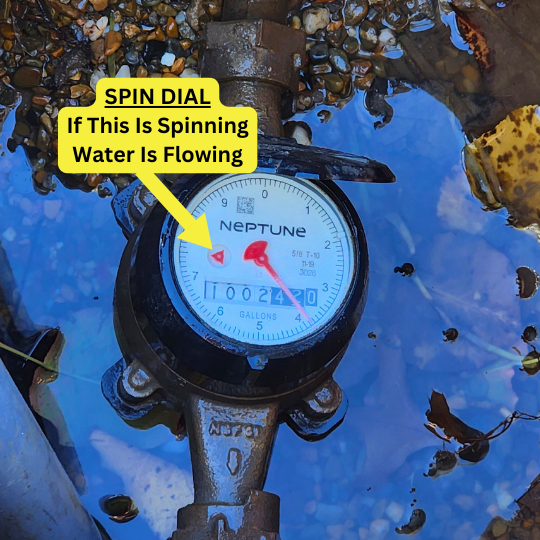
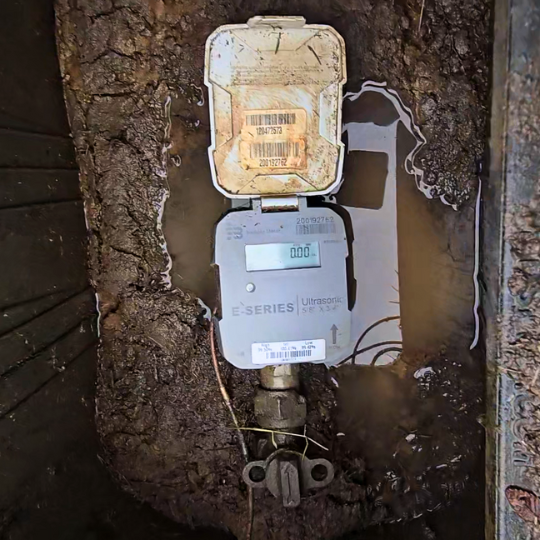
A moving meter can indicate water use, but it does not identify where the water is going. Ice makers, irrigation systems, pool autofill devices, water-treatment equipment, and other automatic fixtures can create legitimate flow. Turn known equipment off before using the meter as a leak check. If water continues flowing after the shutoff should be closed, call the utility or a licensed plumber instead of forcing it.
Build a small water-shutoff kit before you need it
Keep the kit in an accessible, dry location—not inside the meter box.
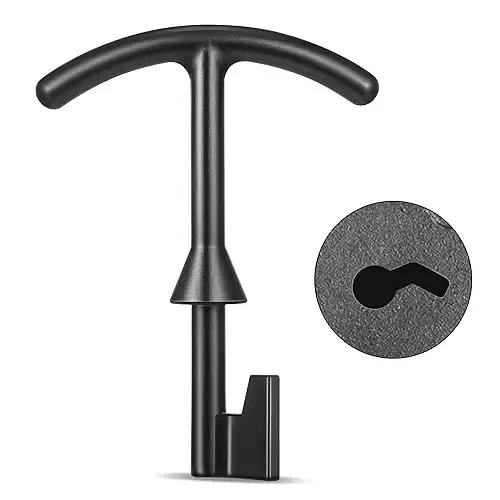
- Meter-box lid key that fits the local lid
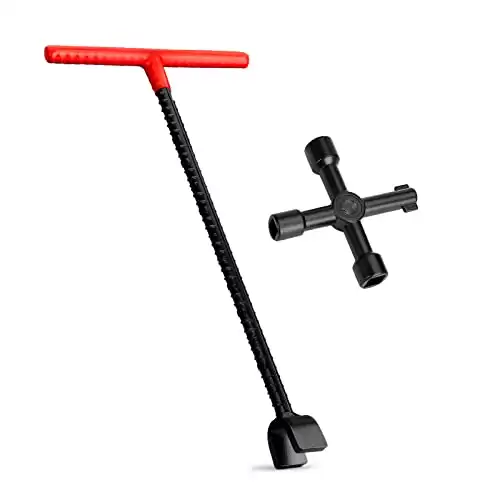
- Water-meter valve key that fits the valve orientation
- Adjustable wrench for a confirmed compatible valve
- Work gloves
- Flashlight or headlamp
- Towel
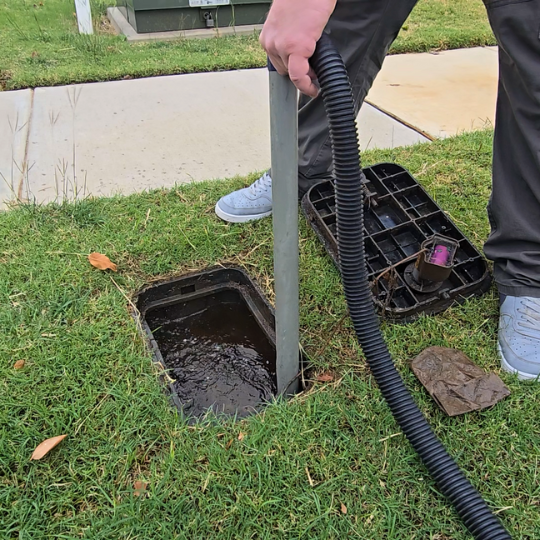
- Optional manual siphon pump for rainwater in a meter box
Bryan’s tool preference
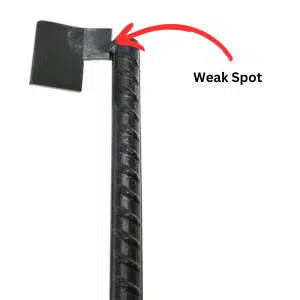
Bryan prefers a standalone meter-box lid key and a separate steel T-handle valve key for many residential meter setups. Separating the two jobs avoids relying on a small welded lid-key attachment. Bryan has encountered combination tools with weak welds or cast components that broke when force was applied. That does not mean every combination tool will fail, but it is a reason to inspect construction and avoid excessive torque.
Three useful items—not a wall of product links
Standalone meter-box lid key and steel T-handle meter valve key. These are Bryan’s preferred tool types for many residential setups. The tool must match the actual lid and valve.
|
|
|
$9.99
|
$11.99
|
Manual siphon pump for standing rainwater. This is an optional way to improve visibility in a rain-filled meter box. Stop and call the utility when water is spraying, the meter is damaged, or the conditions are unsafe.

Buying a meter key does not mean the utility permits a homeowner to operate its equipment. Confirm local rules and fit before an emergency.
When to call Sergeant Plumber Corporation
Request professional help when you cannot find or positively identify the shutoff; a valve is corroded, broken, buried, spinning, or leaking; the leak is inside a wall, under a slab, beneath the floor, or underground; the meter box is flooded; water continues moving after the main is closed; or sewage, hot water, electricity, gas, or structural damage creates a hazard.
Call (972) 595-4431Text Sergeant PlumberLeak Detection Service
Prepare now, not while water is spreading
- Find and label the fixture valves and whole-house main.
- Confirm the correct meter procedure with your local water provider.
- Keep the needed tools together.
- Show every responsible adult in the home where the shutoffs are.
- Test homeowner-owned valves carefully during routine maintenance—not for the first time during a flood.
- Add leak alarms or an automatic shutoff when the home’s risk justifies another layer of protection.
Sources
- City of Frisco Fix-a-Leak Manual — meter ownership, locations, shutoff guidance, and access.
- CDC: Protect Yourself From Electrical Hazards — standing-water and wet-electrical-equipment safety.
- Ready.gov: Are You Ready? Guide — utility shutoff preparedness.
Field guidance reviewed by Bryan Messman, Responsible Master Plumber, M-43168. Updated September 2, 2026.