
Best Faucet Installation Tools for Tight Sink Cabinets
Faucet installation becomes difficult where supply lines, the basin, disposal, and cabinet walls crowd the mounting hardware. The right tool is the one that can reach the actual nut without loading fragile tubing or damaging finishes.
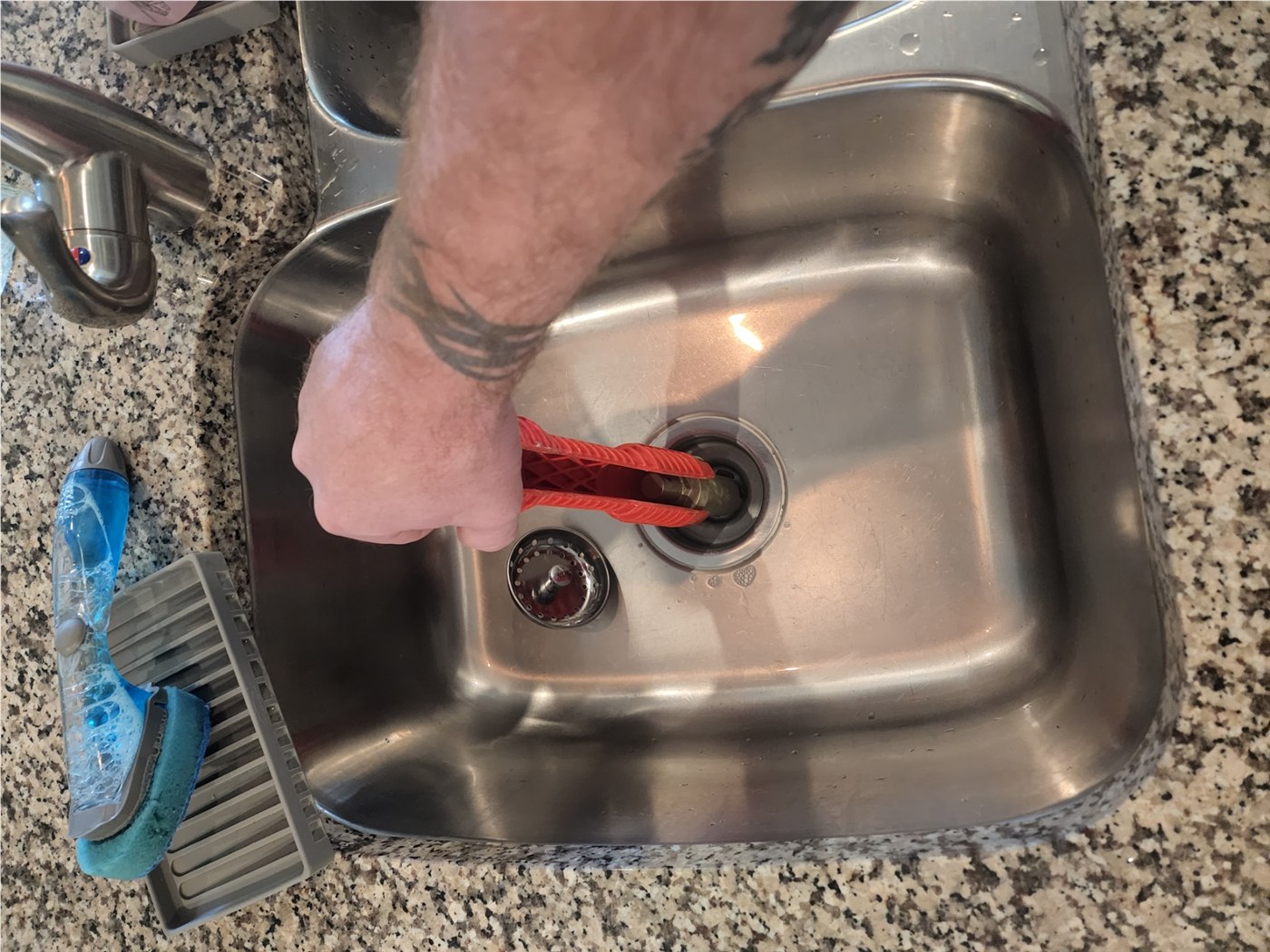
Quick answer
Use a multi-pattern faucet tool when the faucet's mounting nuts, supply nuts, or retaining hardware match its sockets and open channels. Use a basin wrench when a conventional nut sits high behind the sink and the pivoting jaw can engage it. Keep smooth-jaw adjustable pliers for accessible flats and controlled counter-holding, not blind crushing pressure on plated or plastic parts.

The aerator, mounting hardware and supply connections involve different access points and fasteners. A tool that fits one may not suit another.
- AeratorIdentify exposed or recessed design and the actual size.
- Mounting fastenerWorking clearance matters as much as tool length.
- Supply connectionsUse the correct fastener size and protect finished surfaces.
Who this guide is for
This guide is for homeowners planning an ordinary kitchen or bathroom faucet replacement in a cramped base cabinet. It does not assume that corroded, proprietary, stone-mounted, or hard-piped connections are safe DIY work.
How we evaluated the fit
Tools are compared by access geometry, compatible fastener shapes, counter-holding ability, handle clearance, finish protection, and common removal constraints. No hands-on ranking or claim that one tool fits every faucet is made.
Three checks that matter first
Use these checkpoints to narrow the field before comparing individual models.
Photograph the mounting system
Before buying a tool, use a phone camera and light to identify nuts, brackets, shanks, hoses, and available approach angles. Faucets may use winged plastic nuts, metal locknuts, horseshoe plates, long shank nuts, or a top-mount system. The silhouette dictates the tool.
Measure the handle swing
A tool can reach the nut yet remain unusable if its handle strikes a disposal, trap, or cabinet divider. Measure vertical and lateral clearance. A hollow or slotted tool may pass around a supply tube; a basin wrench may need room to pivot and reset.
Plan counter-hold points
Turning one fitting can twist the valve, copper stub-out, braided line, or faucet body. Identify the stationary hex or body that must be supported. If no safe counter-hold is accessible, forcing the connection from one side can create a concealed leak.
Clear the cabinet before choosing a wrench
Remove stored products and protect the cabinet floor. Close both stops, open the faucet to relieve pressure, and verify that water actually stops. Place a shallow pan beneath the connections. Photograph labels and hose routing before disconnecting anything. If a shutoff does not close fully, leaks at the stem, or turns with the piping, repair the valve before attempting a faucet swap.
Map each obstacle: basin depth, disposal body, trap, filtration equipment, drawer rails, and the rear cabinet wall. Note whether the faucet includes factory hoses and whether mounting hardware can be reached from above. This survey may reveal that a multi-use faucet tool can travel straight up a shank, while a basin wrench needs a side angle, or that neither can access a proprietary top-mounted clamp.
Three tool types, three different strengths
A faucet installation tool combines several socket or gripping shapes in a long body, often with openings for supply lines. It can be efficient when the target hardware matches exactly. A basin wrench uses a spring-loaded or self-orienting jaw on a long shaft to reach high conventional nuts. Its head direction must be set for loosening or tightening, and the jaw needs room to bite squarely.
A smooth-jaw pliers wrench works best where flats are visible and the jaws can remain parallel. It can hold a valve body, compression nut, or accessible faucet fitting without serrated tooth marks when used correctly. It is not a substitute for a deep socket in a blind cavity, and its leverage can damage plastic. Standard open-end wrenches may still be best on exposed supply connections because they positively fit the hex.
Removal and installation without new leaks
Support the faucet above while loosening the final mounting nut below. Corrosion may require cleaning exposed threads and allowing an appropriate penetrant time to work, but do not apply uncontrolled force against a stone countertop or thin stainless deck. When hardware cannot be removed without cutting, shield hoses, wiring, the sink, and the counter; this is often the point where professional removal is safer.
Install the new faucet according to its gasket and sealant instructions. Thread nuts by hand first to avoid cross-threading, align the faucet, then tighten incrementally. Reconnect supplies without twisting or stretching them, restore water slowly, and inspect with a dry towel while operating hot, cold, spray, and swivel functions. Recheck mounting stability and every connection after the cabinet has remained dry for several minutes.
Options that fit this decision
These links lead to current Amazon listings. Verify the exact model and installation requirements before ordering.
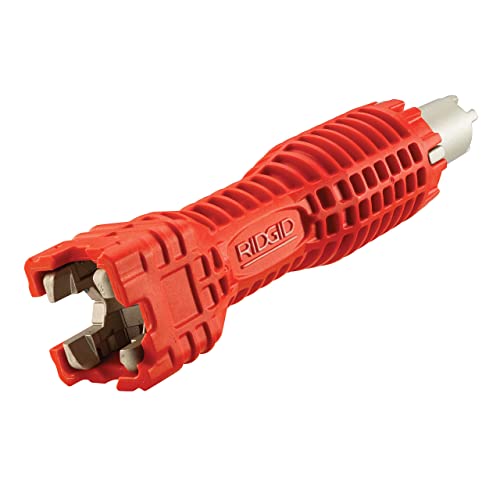
RIDGID 57003 EZ Change Faucet Tool
A multi-function tool intended to engage several common faucet and supply hardware shapes while working around tubing. It is useful only when one of its interfaces matches the specific nut or bracket. See the RIDGID EZ Change fit details before choosing it.
- Check first
- Identify the fastener shape, outside dimensions, supply-line path, required depth, and available turning clearance.
- Best for
- A cramped cabinet with compatible faucet mounting or supply hardware and a relatively straight access path.
- Skip if
- The faucet uses proprietary top-mount hardware, severe corrosion, or a nut the tool cannot seat on fully.

RIDGID 31175 Model 1017 Fold-Over Basin Wrench
A pivoting-jaw tool for conventional nuts positioned behind a basin where ordinary wrenches cannot swing. It provides reach and directional grip but needs enough space for its head to orient and bite.
- Check first
- Verify nut size range, jaw access, handle extension, and a way to counter-hold the fitting.
- Best for
- High, conventional faucet nuts reachable from below at an angle.
- Skip if
- The nut is plastic and fragile, hidden inside a proprietary bracket, or surrounded by obstacles that prevent jaw engagement.

KNIPEX 86 03 250 Pliers Wrench
Parallel smooth jaws can support or turn accessible flats while reducing tooth marks on finished hardware. Its leverage is precise in open space but can be excessive on thin plastic or deformable tubing.
- Check first
- Confirm jaw capacity, full contact on flat surfaces, handle clearance, and the fitting manufacturer's tool guidance.
- Best for
- Accessible hex fittings and controlled counter-holding where finish protection matters.
- Skip if
- Only an edge can be gripped, the connection is hidden overhead, or the component cannot tolerate clamping force.
Frequently asked questions
Is a faucet tool better than a basin wrench?
Neither is universally better. A faucet tool matches specific hardware patterns; a basin wrench grips accessible conventional nuts from an angle.
Can I reuse old faucet supply lines?
Follow faucet and hose guidance. Replace lines that are kinked, corroded, abraded, too short, or incompatible with the new connections.
Why does the shutoff valve turn when I loosen the hose?
The valve body is not being counter-held or its connection is loose. Stop before stressing concealed piping and get plumbing help if secure support is unavailable.