
RIDGID EZ Change Faucet Tool Review: Access & Compatibility
The RIDGID EZ Change faucet tool combines several under-sink interfaces in a compact body for tight-space clearance. Its usefulness depends on a positive match with the fastener, supply path, and cabinet geometry.
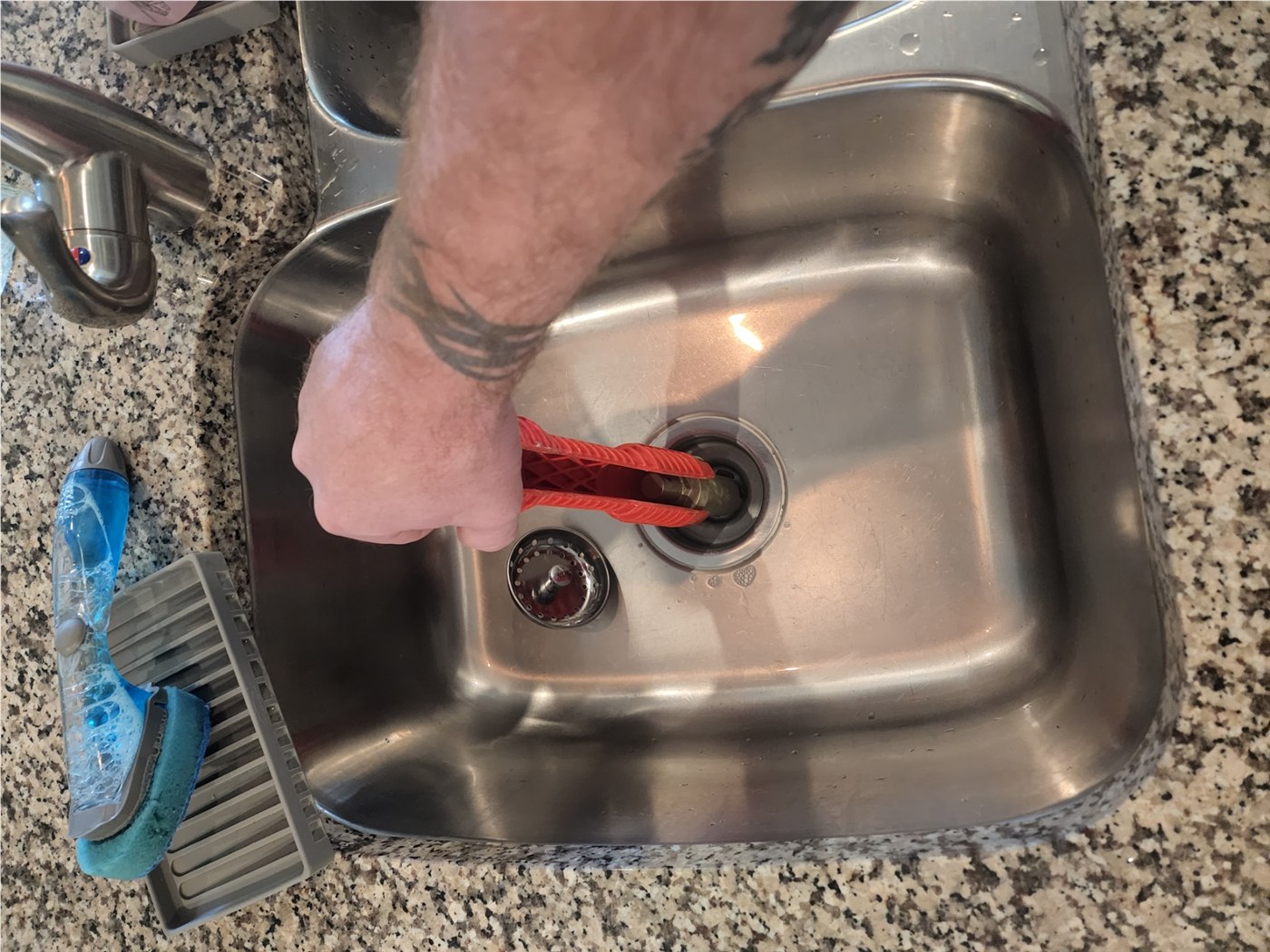
Quick answer
The EZ Change is worth considering when a faucet mounting nut or supply fitting matches one of its supported shapes and a straight or slightly angled path exists from below. RIDGID describes a short body for tight-space clearance, not an extension for extra reach. Check the actual fastener size and working room before buying. It should not be treated as a universal socket, corrosion breaker, or substitute for counter-holding a shutoff valve.

The aerator, mounting hardware and supply connections involve different access points and fasteners. A tool that fits one may not suit another.
- AeratorIdentify exposed or recessed design and the actual size.
- Mounting fastenerWorking clearance matters as much as tool length.
- Supply connectionsUse the correct fastener size and protect finished surfaces.
Who this guide is for
This review is for homeowners preparing a faucet replacement and deciding between a multi-function faucet tool, a basin wrench, and separate hand tools in a crowded cabinet.
How we evaluated the fit
The product is evaluated through published tool functions, interface geometry, access path, leverage, material sensitivity, and the plumbing tasks it is intended to address. No personal testing or all-faucet compatibility is claimed.
Three checks that matter first
Use these checkpoints to narrow the field before comparing individual models.
Name the hardware before selecting the interface
Use a camera to identify whether the faucet is held by a hex nut, winged nut, supply-line nut, or bracket. Compare that shape with the current EZ Change instructions. A near fit can round corners or strip plastic, so the tool must seat fully rather than merely touch two edges.
Trace the whole access path
Even a compact tool needs a corridor from the cabinet opening to the fastener. Check for the disposal, trap, drawer boxes, rear wall, and factory hoses. An interface may match the nut but remain unusable if the body cannot align or rotate far enough to reset.
Separate reach from torque
Extra force can break a plastic mounting nut, twist a copper tube, or stress a thin sink deck. Support the faucet, use the appropriate interface, and apply only the force the hardware can accept.
Where a multi-function body helps
Many faucet nuts sit on long threaded shanks directly beneath the sink, with supply tubes occupying the same narrow space. A conventional socket cannot pass over the tubing, and an open-end wrench may have almost no swing. The EZ Change combines several working ends and inserts in a short body. Its compact shape is intended to leave working room in tight spaces; it does not guarantee access to every recessed nut.
This consolidation can reduce tool changes during a compatible installation. It may address both a mounting component and a supply connection, but each operation still needs its own fit check. Current product instructions should be the authority for which interfaces and sizes are supported. Model changes, proprietary brackets, and unusual commercial faucets can fall outside the tool's intended patterns.
Compatibility questions a product page cannot answer
Cabinet layout is site-specific. Measure the fastener depth below the sink and the distance to the cabinet floor or shelf. Photograph the nut from at least two directions, then inspect whether a line passes through its center or alongside it. A rigid tube with little movement must not be bent just to accommodate the tool. Confirm that the body can remain square during the first loosening turn.
Material also matters. Some faucet locknuts are plastic and may be brittle with age; others are thin metal beneath corrosion. The EZ Change may provide more leverage than the component can tolerate. Clean exposed threads and follow safe removal guidance before applying force. If the entire faucet turns, have a helper stabilize it above or stop until a safe holding method is available.
Using it as part of a complete installation
Close and verify both shutoffs, relieve pressure at the faucet, disconnect power to nearby disposal equipment when hands will work around wiring, and contain residual water. Select the exact tool interface before reaching overhead. Thread removal should begin with the tool square to the fastener. If it slips, reassess size and alignment rather than repeating an edge-only grip that damages the nut.
For the new faucet, start mounting and supply threads by hand. Use the EZ Change only where the faucet instructions allow and tighten gradually while checking alignment above. Counter-hold valve bodies and adapters so hidden piping does not twist. Restore water slowly, operate every function, and inspect each joint with a dry towel. A tool that reaches the nut does not verify gasket placement or watertight assembly.
Options that fit this decision
These links lead to current Amazon listings. Verify the exact model and installation requirements before ordering.
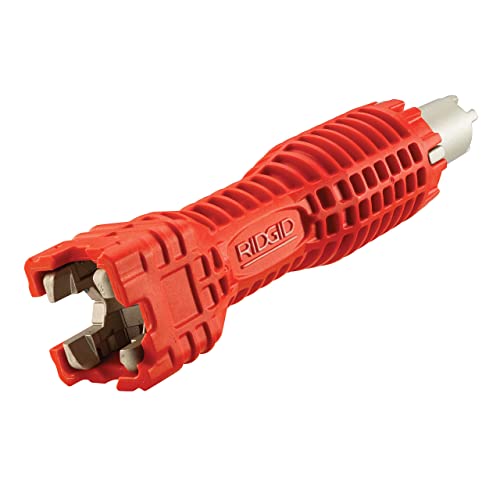
RIDGID 57003 EZ Change Faucet Tool
The compact body combines several interfaces for supported faucet hardware. Choose it for a verified fit and useful working clearance, rather than assuming it adds reach. It performs best when its working end fully matches the hardware and the body has a straight, obstruction-free path.
- Check first
- Review supported fastener types and dimensions, then measure tool path, turning clearance, supply routing, and the need for counter-holding.
- Best for
- Compatible faucet mounting and supply hardware located high in a tight but reachable cabinet.
- Skip if
- The nut is proprietary, badly corroded, inaccessible in line with the tool, or connected to piping that cannot be supported.
Frequently asked questions
Does the EZ Change replace a basin wrench?
Not in every cabinet. It uses defined interfaces, while a basin wrench can grip some conventional nuts from an angle. Hardware and access decide.
Can it tighten plastic faucet nuts?
Only if the nut type is supported and the faucet instructions permit tool tightening. Start by hand and avoid force that can crack plastic.
Why does the tool slip off the nut?
The interface may be wrong, misaligned, obstructed, or not fully seated. Stop before rounding the fastener and inspect with a camera.