
RIDGID 1017 Basin Wrench Review: Reach, Jaw Fit and Limits
The RIDGID 1017 basin wrench uses a telescoping shank and pivoting head to reach compatible faucet nuts behind a sink. Its 10–17-inch reach and 3/8–1¼-inch capacity are starting checks; the jaw still needs a clean bite and the handle needs room to turn.
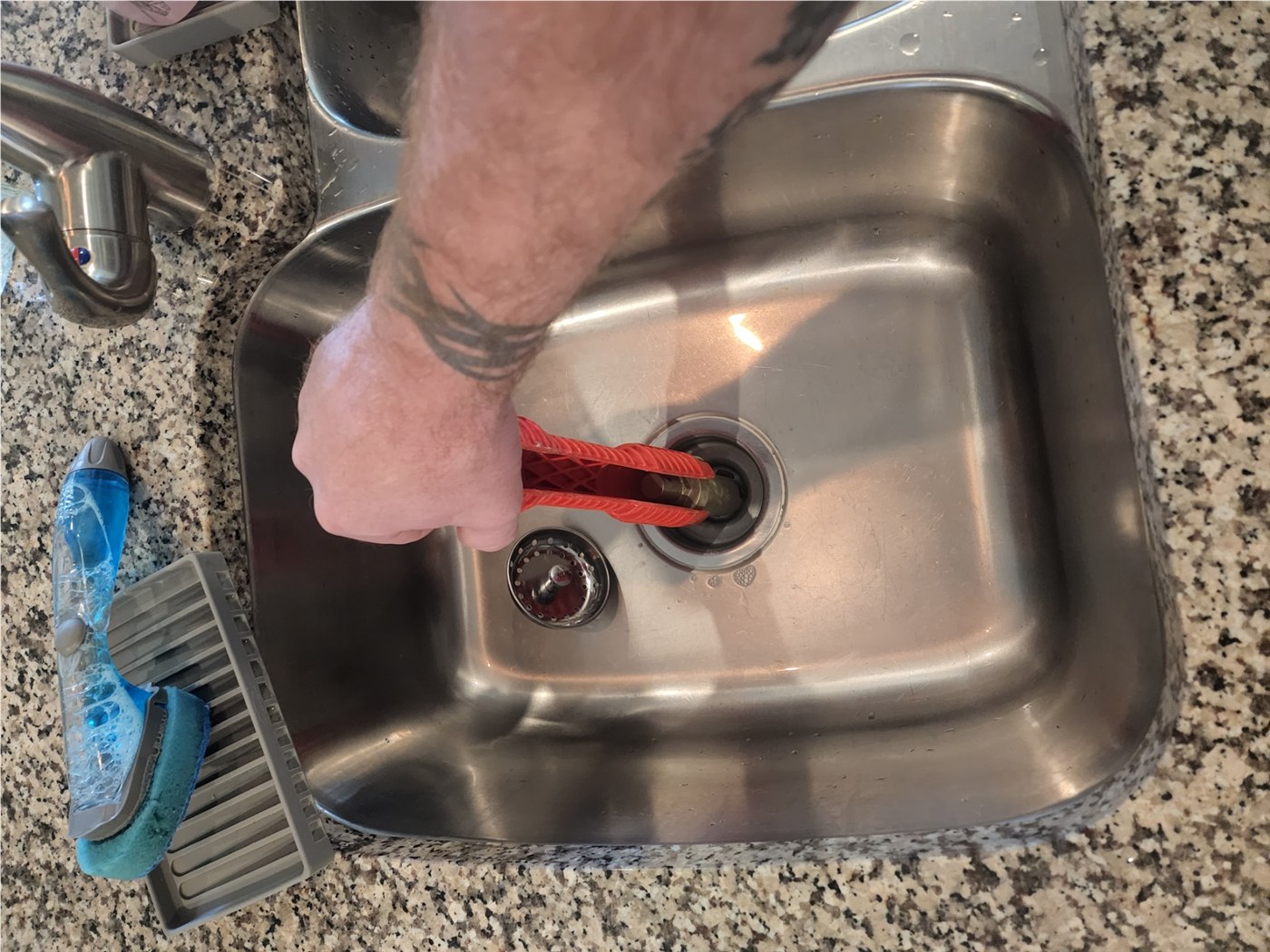
Quick answer
Consider the 1017 when a conventional faucet or supply nut is within its 3/8–1¼-inch capacity, the 10–17-inch telescoping shank provides the needed reach, and there is room for both the head to seat and the handle to turn. It is less suitable for proprietary brackets, fragile plastic wings, smooth round shanks, or cabinets where a disposal and trap block the head itself. Always plan a counter-hold before applying torque.

The aerator, mounting hardware and supply connections involve different access points and fasteners. A tool that fits one may not suit another.
- AeratorIdentify exposed or recessed design and the actual size.
- Mounting fastenerWorking clearance matters as much as tool length.
- Supply connectionsUse the correct fastener size and protect finished surfaces.
Who this guide is for
This review is for homeowners evaluating a traditional basin wrench for faucet removal or installation in a tight cabinet. It assumes the water can be safely isolated and the fastener identified.
How we evaluated the fit
The analysis uses RIDGID's published 1017 specifications, telescoping-shank and pivoting-head design, access geometry, fastener engagement, and plumbing safety constraints. Manufacturer references appear with the product fit check. No personal test or claim of compatibility with every faucet is included.
Three checks that matter first
Use these checkpoints to narrow the field before comparing individual models.
Make sure the jaw can reach the nut
A basin wrench succeeds only if its head can travel behind the basin, open around the fastener, and remain square as force is applied. Photograph the area and measure clearance around hoses, mounting studs, a disposal, and the sink wall before selecting the tool.
Check handle clearance as well as reach
Extending the 1017 changes its reach, but does not guarantee room to turn the handle. Check the cabinet wall, trap, and hoses along the turning path before loading the jaw. Use controlled movements and stop if the faucet twists or the jaw slips.
Reverse the head for the turn direction
Pivoting jaws are directional. Set the head so applied torque increases its grip in the intended loosening or tightening direction. If the jaw skates, stop and reset rather than allowing serrations to chew a nut that another tool must later remove.
Why the basin-wrench shape still matters
Faucet mounting hardware often sits between the basin and rear cabinet wall, above the line of sight. The 1017's long shaft moves the operator's hand below those obstructions, while the head pivots to approach a nut from the side. This geometry addresses a different problem than a deep socket or multi-pattern faucet tool, which generally needs a straighter path along the fastener axis.
The 1017's shank telescopes from 10 to 17 inches, while a tension plug holds the head at positions up to 90°. This lets you adjust reach and head position, but does not provide the separate 2017 model's pivoting T-handle. Neither adjustment can compensate for a head that is too large, a nut enclosed by a bracket, or tubing directly against the fastener. Evaluate access from the head to the handle.
Fastener fit and controlled leverage
Clean enough of the fastener to identify its shape and expose sound edges. Position the jaw around opposing sides, orient it for the direction of travel, and apply light torque while watching the head with a mirror or camera when possible. A properly engaged jaw should remain seated as the shaft turns. Edge-only contact can round soft metal or split an aged plastic nut.
Before loosening a supply connection, locate the stationary part that needs support. A second wrench may be required on the valve body or adapter. At the faucet mount, a helper can hold the faucet above so the base does not rotate across the sink or countertop. Extending the shaft changes reach; it does not by itself increase turning leverage about the nut. Do not overpower corroded components or allow force to transfer into concealed piping.
When a different approach is better
A long faucet installation tool can be preferable when the nut matches a supported socket and a supply tube passes through the center. An open-end wrench may be more positive on an accessible supply hex. For a badly corroded mounting nut, careful cutting may be required, but sparks, sharp debris, countertop damage, nearby hoses, and electrical equipment make that a professional decision in many cabinets.
During installation, thread new hardware by hand and follow the faucet's tightening method. Some modern systems install entirely from above or use a special clamp that a basin wrench should not grip. Align the faucet before final tightening, reconnect supplies without twist, then restore water slowly. Inspect the base and every joint during operation and again after the cabinet has dried.
Options that fit this decision
These links lead to current Amazon listings. Verify the exact model and installation requirements before ordering.

RIDGID 31175 Model 1017 Telescoping Basin Wrench
RIDGID lists the 1017 (catalog 31175) with a 10–17-inch telescoping shank and 3/8–1¼-inch capacity. Its spring-loaded jaws and positionable head help engage compatible nuts behind a basin. Check full jaw engagement, head access, and the room needed to turn the handle before applying torque.
- Check first
- Compare the 3/8–1¼-inch capacity with the actual fastener, check the 10–17-inch reach, measure head access and handle swing, and identify a safe counter-hold point.
- Best for
- A compatible conventional nut high behind a sink where ordinary wrenches lack reach or swing.
- Skip if
- The fastener is proprietary, rounded, fragile plastic, obstructed on all sides, or tied to unsupported piping.
Frequently asked questions
Does the RIDGID 1017 have the 2017's pivoting T-handle?
No. The 1017 (catalog 31175) has a telescoping shank and positionable head. RIDGID assigns the 180° pivoting T-handle and 3/8-inch drive adapter to the separate 2017 (catalog 46753). Check the exact model rather than assuming the handle features are shared.
Why does the basin-wrench head keep slipping?
The head may be reversed, off-center, outside its range, or blocked from seating. Clean and inspect the nut before applying more force.
Can a basin wrench tighten a new faucet?
Yes when the faucet instructions and nut shape permit it. Start threads by hand, align the faucet, and avoid overtightening.