
COPPER WORK / PREPARATION
Copper Pipe Deburring Tools: The Small Step a Cutter Does Not Finish
A neat circle at the end of a copper tube can still hide a sharp internal lip. The right preparation tool addresses that edge without damaging the tube.
Choose your preparation toolCheck reamer size and material
Sergeant Plumber Corp. · Veteran-owned · Practical plumbing, smarter buying

The short answer
Use a copper-compatible reamer or deburring tool sized for the tube. Internal reaming, external edge preparation, and cleaning the joining surfaces are different tasks; one brush or abrasive strip does not automatically do all three.

The cut edge, mating surfaces and joining materials each have a different role. This close-up explains the work area; it does not show a particular branded tool.
- Cut edgeInspect the cut and remove the internal burr.
- Mating surfacesThe tube and fitting both need the specified preparation.
- Flux and filler choiceMatch materials and the joining method to the job.
Cut, deburr, or clean?
Match the unfinished step to the tool. A brush cleans the joining surface; it does not automatically remove the cutting burr.
Product options to compare
Affiliate disclosure: As an Amazon Associate, Sergeant Plumber Corp. may earn from qualifying purchases. If you buy through a link on this page, Sergeant Plumber Corp. may earn a commission at no additional cost to you.
These are specification-based options, not a ranked hands-on test of every product. Our project photos illustrate the work; they do not establish that every linked model was used on that job. Always confirm fit and current instructions.
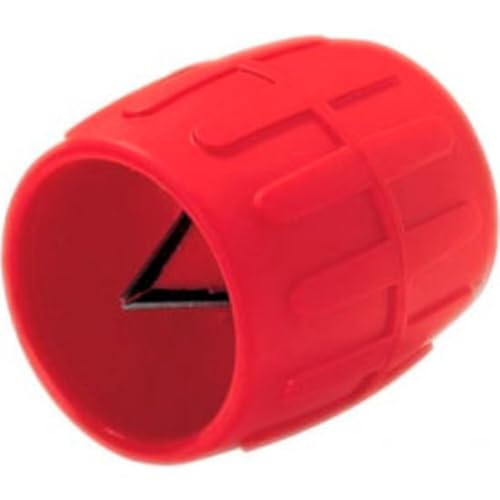
PREPARE THE CUT EDGERIDGID 127 inner/outer reamer — 34965
Model 127 prepares the inside and outside of a cut tube end. RIDGID lists a 1/4–1-1/2 inch tube outside-diameter capacity and copper as an intended material. Check the manufacturer specifications.
Before you buy: Confirm model 127 and your actual tube OD. The linked listing uses 34965; RIDGID currently lists 34965R. Verify the selected package. The 127S is a different model, and a reamer does not replace cleaning.
View RIDGID 127 reamer on Amazon
Paid link · Confirm the selected model and package before ordering.

CUT THE TUBERIDGID Model 101 close-quarters tubing cutter
Model 101, catalog 40617: a manual-feed cutter with a listed 1/4–1-1/8 inch tube outside-diameter range. RIDGID lists the E-3469 as its standard wheel. Check the manufacturer specifications.
Before you buy: Match the actual tube OD, copper-compatible wheel, and space for the entire tool to rotate. This is the 101, not the multilayer-only 101-ML.
View RIDGID 101 cutter on Amazon
Paid link · Confirm the selected model and package before ordering.
Why the inside edge matters
Cutting can displace metal toward the inside of the tube. That lip needs inspection even if the outside edge looks straight. The Copper Development Association describes reaming and deburring as part of preparation, followed by cleaning the surfaces that will be joined. Treating all of that as ‘a quick sand’ skips an important distinction. Copper Tube Handbook.
The goal is a properly prepared end—not removing as much metal as possible. An aggressive tool used carelessly can damage the tube. Stop if the edge becomes uneven, the tube deforms, or you cannot control where the chips go.
Three tools people confuse
- Internal reamer or deburring blade
- Addresses the cut edge on the inside of the tube. Match its working range and material rating.
- Inner/outer preparation tool
- Offers working surfaces for both sides of the tube end. Confirm the model is intended for your material and size.
- Fitting brush or abrasive cloth
- Cleans the joining surfaces. Cleaning oxidation is not the same job as removing a cutting burr.
A compact combination tool can be convenient in a small bag. A separate tool may offer better control for repeated work. The right choice depends on access, tube size, and the connection you are preparing.
Check the exact model
Browse pictured copper cutters & reamers →
RIDGID’s 127 inner/outer reamer is a useful example of a dedicated preparation tool. Its published size range and material application should be checked against the tube before purchase. Similar product names can refer to different constructions and intended materials. RIDGID 127 product information.
Do not buy a tool simply because a listing includes the words ‘pipe reamer.’ Tools intended for plastic pipe, copper tube, or heavier metal work may have very different cutting geometry. Read the actual manufacturer model number.
Prepare for the connection you will make
For soldered copper joints, cutting, edge preparation, and cleaning are part of getting the surfaces ready for the specified flux and filler. A press-fitting or push-to-connect manufacturer may require additional checks, including insertion depth and its own tube-condition requirements. Do not assume the instructions for one system cover another.
Builders should make this a material-and-system checklist rather than a brand preference: tube specification, approved fitting, required preparation, and the correct installation instructions. Homeowners should remember that buying the preparation tool does not establish that the proposed repair is suitable.
Keep debris out of the repair
Metal chips do not belong inside an open water line. Plan how to contain and remove debris before preparing the end. Keep the tube and tools clean, inspect the finished edge, and follow the joint manufacturer’s cleaning requirements. Do not use a fingertip as a sharp-edge detector.
When a small tool is not the answer
If the tube is crushed, deeply scratched, badly corroded, or cut too close to a fitting, deburring will not restore the missing sound material. The repair may need a different cut location or replacement section. Likewise, a leak at a joint cannot be diagnosed from the presence or absence of a burr alone.
Keep this purchase practical: buy a reliable tool that covers the copper sizes you actually work with. Add specialty sizes only when the work justifies them.
Common questions
Is a wire brush a deburring tool?
Not by itself. A brush cleans surfaces; a reamer or deburring blade addresses the cut edge.
Should I ream copper before every type of fitting?
Inspect and prepare the tube according to that fitting system’s instructions. Do not transfer requirements blindly between systems.
Can deburring fix damaged or flattened tube?
No. A damaged tube end may need to be cut back or replaced rather than shaped into a forced fit.