
CONNECTIONS / LEAK PREVENTION
PTFE Tape vs. Pipe Thread Sealant: First Identify the Connection
Some plumbing connections seal at the threads. Others seal at a washer, ferrule, flare, or gasket. Adding tape to the wrong place is not extra insurance.
Sergeant Plumber Corp. · Veteran-owned · Practical plumbing, smarter buying
As an Amazon Associate, Sergeant Plumber Corp. may earn from qualifying purchases.
The short answer
Use an approved thread sealant only where the connection manufacturer calls for it. PTFE tape and paste-type compounds serve suitable threaded connections; they do not replace the sealing washer or other working seal in a different connection design.

Some connections seal with tapered pipe threads; others use a gasket, washer or compression surface. The visible nut alone does not tell you whether tape or compound belongs there.
- Faucet mounting areaAccess and fastener shape affect tool choice.
- Supply stops and hosesIdentify the connection before loosening a part.
- Drain and P-trapDrain joints seal differently from threaded supply fittings.
What actually seals your connection?
Choose the path that matches the fitting instructions. A nut with threads can still seal at a separate washer, gasket, ferrule, or flare.
Product options to compare
Browse pictured tape & thread compounds →
Affiliate disclosure: As an Amazon Associate, Sergeant Plumber Corp. may earn from qualifying purchases. If you buy through a link on this page, Sergeant Plumber Corp. may earn a commission at no additional cost to you.
These are specification-based options, not a ranked hands-on test of every product. Our project photos illustrate the work; they do not establish that every linked model was used on that job. Always confirm fit and current instructions.

Oatey white thread-seal tape — 31199
A 1/2-inch-wide, 260-inch roll for appropriate threaded applications listed by the manufacturer.
Before you buy: Tape color does not establish suitability for every service. Check the connection’s sealing method before using it.
Paid link · Confirm the selected model and package before ordering.
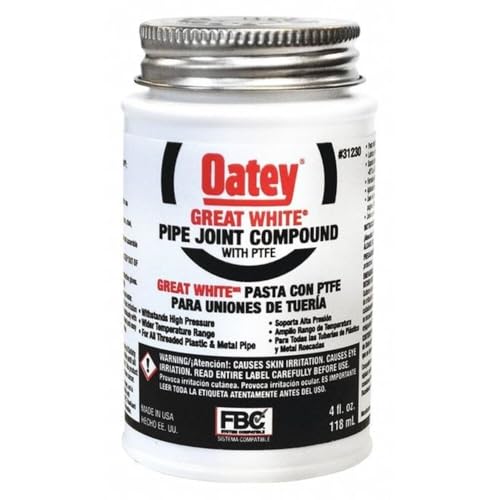
Oatey Great White pipe-joint compound — 4 oz
A brush-top pipe-thread compound to evaluate for connections that specifically call for a compatible sealant.
Before you buy: Check exact materials, service and fitting instructions. Do not apply by default to washer-sealed hose or slip-joint nuts.
Paid link · Confirm the selected model and package before ordering.
A threaded nut does not always mean a threaded seal
Look at the complete connection, not just the visible threads. A nut can pull two parts together while a separate washer or other component does the sealing. Adding tape to those nut threads may not address the leak at all.
For example, a hose connection with a flat washer and a sink-trap slip joint use different sealing arrangements from a suitable tapered pipe-thread connection. Identify the assembly from its instructions before taking it apart or applying a product.
What PTFE tape brings to an appropriate joint
PTFE thread-seal tape is supplied on a roll and applied to suitable male threads according to the product and fitting instructions. Width, thickness, density, and service rating can vary. A familiar color is not enough information to approve a tape for a particular material or fluid.
Oatey’s thread-sealant resources distinguish products by application and specification. Use the actual product label together with the fitting instructions, rather than assuming a roll advertised as ‘plumber’s tape’ is universal. Oatey thread-seal tape information.
What a paste-type compound changes
A pipe-joint compound is another option where approved. Its compatibility with plastic, metal, potable water, and other services depends on the formulation. Check both the sealant and the fitting manufacturer; approval from one does not override a restriction from the other.
A brush-top container can be convenient for repeated work, but the amount and placement still matter. Keep excess material out of the waterway. Do not treat a thick coating as a way to repair damaged threads or mismatched parts.
Can tape and compound be used together?
Do not make that a universal recipe. Some approved procedures may allow a combination; other products or fitting systems have different requirements. Follow the instructions for the exact components. More material can change assembly feel and is not proof of a better seal. Oatey’s thread-sealant overview.
Four things to check before buying
- Connection type: identify the actual sealing surface.
- Materials: check the specific metal or plastic components.
- Service: confirm the sealant is approved for what the pipe carries and the relevant operating conditions.
- Assembly instructions: follow the specified application and tightening method.
Keep the label with the product. An unmarked leftover roll or brush-top container is a poor choice when compatibility matters.
When sealant is not the repair
Cross-threaded fittings, cracked plastic, a missing washer, distorted tube, and a corroded sealing surface need their own repair. If a connection continues to leak, do not keep adding material or leverage without diagnosing it. A smooth-jaw wrench may protect flats, but it cannot restore a damaged seal.
This comparison does not cover DIY fuel-gas work or live pressurized repairs. Isolate water safely before opening a connection, and use qualified help where the service or condition is uncertain. Renters should report leaking installed plumbing rather than experimenting with sealing products.
Common questions
Should every threaded nut get tape?
No. Many nuts tighten a separate washer, gasket, flare, or other sealing component.
Does tape color prove it is suitable?
No. Read the product’s actual rating and the fitting manufacturer’s requirements.
Will extra compound fix damaged threads?
No. Damaged, mismatched, or cross-threaded components need evaluation and often replacement.