
KITCHEN SINK / TOOL SELECTION
Sink Basket Strainer Wrenches: Holding the Drain Without Wrecking It
A spinning strainer can turn a simple drain replacement into a two-person wrestling match. The right tool depends on the part you are holding and the part you are turning.
Sergeant Plumber Corp. · Veteran-owned · Practical plumbing, smarter buying

The short answer
Identify the strainer design before buying. One tool may hold the basket from above while another turns the locknut below. A faucet tool’s strainer feature works only on compatible crossbar or slot patterns; it is not universal.

A drain flange, tubular trap and faucet supply connection do not all seal or tighten the same way. Identify the material and joint type first.
- Faucet mounting areaAccess and fastener shape affect tool choice.
- Supply stops and hosesIdentify the connection before loosening a part.
- Drain and P-trapDrain joints seal differently from threaded supply fittings.
Which part are you working on?
A holding tool and an optional sealing material
These products do different jobs. The EZ Change can hold compatible basket patterns; the putty is a sealing material only where the drain and surface instructions allow it. The holding tool does not replace the correctly sized wrench for a large locknut below.
Affiliate disclosure: As an Amazon Associate, Sergeant Plumber Corp. may earn from qualifying purchases. If you buy through a link on this page, Sergeant Plumber Corp. may earn a commission at no additional cost to you.
These are specification-based options, not a ranked hands-on test of every product. Our project photos illustrate the work; they do not establish that every linked model was used on that job. Always confirm fit and current instructions.
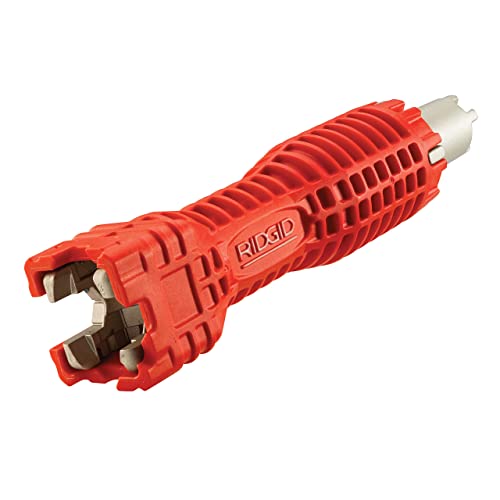
Hold a compatible basket from aboveRIDGID EZ Change tool — 57003
RIDGID lists a retainer for 3- or 4-slot strainer baskets on this tool. Compare those working features with your drain before ordering. See RIDGID’s strainer-retainer details.
Before you buy: The basket slots must be intact and the tool must seat securely. A broken crossbar or seized locknut may require a different repair approach; do not force a poor fit.
View the RIDGID EZ Change on Amazon
Paid link · Confirm the selected model and package before ordering.
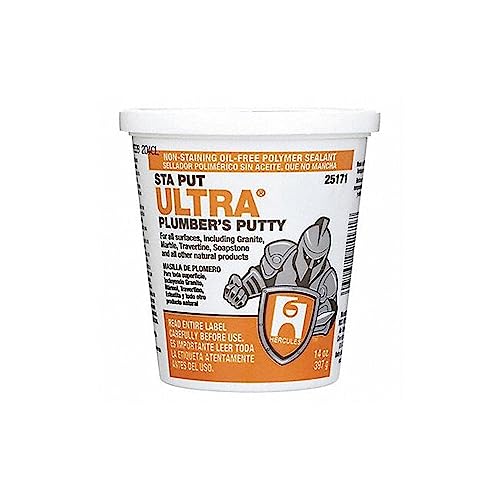
Seal only where this putty is permittedHercules Sta Put Ultra — 25171
A 14-ounce non-staining putty option where both the fixture and surface instructions permit this exact product.
Before you buy: Not for ABS. Oatey lists that restriction for Hercules Sta Put Ultra. Do not substitute it when the drain calls for silicone or a gasket-only installation. Read Oatey’s product restrictions.
Paid link · Confirm the selected model and package before ordering.
Holding and turning are two different jobs
The sink strainer may need to stay still while its fastening nut is loosened or tightened below. If both parts rotate together, more force on the nut may simply spin the flange against the sink. A matching holding tool can provide control from above, while a suitable wrench addresses the nut underneath.
Inspect the actual assembly. Some drains have large locknuts; others use screws or a different mounting arrangement. A tool selected for a photo of another drain may not fit yours.
What to look for from above
Check the strainer’s slots, crossbars, and center opening. A holding tool must engage sound features as designed. Broken or badly corroded crossbars can fail under force. Do not assume that jamming an unrelated object into the opening is equivalent to using a matching tool.
RIDGID’s EZ Change faucet tool includes a strainer-holding feature for compatible patterns. That can be useful if you already need the tool for faucet work, but compatibility still comes first. RIDGID EZ Change tool sheet.
What to look for below the sink
- Nut shape and diameter: match the working end rather than buying by handle length.
- Access: account for the sink bowl, disposal, supply lines, and cabinet walls.
- Condition: corrosion, seized hardware, and damaged threads can change the repair plan.
- Drain connection: avoid twisting the trap or tailpiece while working on the strainer.
A large pair of pliers can be awkward in a crowded cabinet. A dedicated wrench may offer better engagement, but only if there is room to position and move it.
Compare smooth and toothed gripping tools →
Read the photo as a tool-selection example
The original Sergeant Plumber photograph shows a holding tool engaged from the sink side. It illustrates the distinction between holding the basket and working on the fastener below. It is not a claim that every current product linked here matches the photographed tool or fits every strainer.
Take your own clear photo from above and below before ordering. That makes it easier to compare the tool’s working shape with the actual installation.
The seal still needs the right materials
A strainer that is firmly tightened can still leak if its sealing material, gasket arrangement, or seating surface is wrong. Follow the drain manufacturer’s instructions for putty, silicone, or gasket-only installation. Do not add sealing material to compensate for a distorted or cracked part.
If silicone is specified, respect the product’s cure requirements. If putty is specified, confirm surface compatibility. Use our putty, silicone, and gasket-only guide to check the material path. If this exact putty is permitted, the Sta Put Ultra option above includes its ABS restriction.
Stop before a stubborn nut becomes sink damage
If the drain body deforms, the sink moves, or the tool cannot seat securely, stop. Removal may require a different professional approach. Do not strike or pry against the sink bowl as a substitute for a tool that fits.
Protect the cabinet from residual water and keep electrical equipment clear. A disposal adds weight and electrical considerations; do not loosen its mounting or wiring casually to gain access. Renters should have maintenance handle installed drain changes unless the property owner authorizes the work.
For repeat maintenance, a purpose-made holding tool and a matching below-sink wrench can be worthwhile. For a single damaged strainer, paying for a complete repair may be the better purchase.
Common questions
Why does the whole strainer spin?
The basket may need to be held separately while the fastening hardware is turned. The correct method depends on the assembly.
Will a universal faucet tool fit every strainer?
No. Check the actual slot or crossbar pattern and the tool’s stated compatibility.
Does a tighter nut always stop the leak?
No. Incorrect sealing parts, damaged surfaces, or a cracked body will not be solved by more force.