
SINKS & DRAINS / MATERIAL CHOICE
Plumber’s Putty vs. Silicone
The familiar tub of putty is not right for every sink. The best seal starts with the fixture instructions and the materials it touches.
Sergeant Plumber Corp. · Veteran-owned · Practical plumbing, smarter buying
As an Amazon Associate, Sergeant Plumber Corp. may earn from qualifying purchases.
The short answer
Use the sealing material specified by the drain or fixture manufacturer and compatible with the sink surface. Plumber’s putty and silicone are not universal substitutes. Some assemblies use a gasket instead; do not add another material automatically.

The product specified under a drain flange may differ from the seal at a slip-joint washer. Match the fixture material and manufacturer’s instructions.
- Faucet mounting areaAccess and fastener shape affect tool choice.
- Supply stops and hosesIdentify the connection before loosening a part.
- Drain and P-trapDrain joints seal differently from threaded supply fittings.
What do your drain instructions call for?
Some assemblies seal with a gasket alone. Do not add putty or silicone automatically, and do not use either to cover a leak from a damaged part.
Compare options for the specified seal
Browse pictured putty & silicone options →
Affiliate disclosure: As an Amazon Associate, Sergeant Plumber Corp. may earn from qualifying purchases. If you buy through a link on this page, Sergeant Plumber Corp. may earn a commission at no additional cost to you.
These are specification-based options, not a ranked hands-on test of both products. Confirm the exact product, fixture approval, and current instructions before ordering.
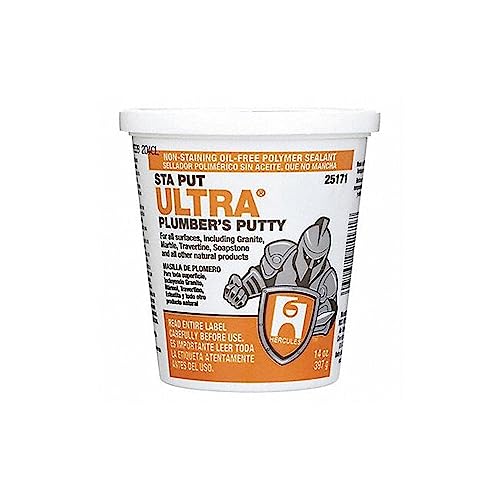
Hercules Sta Put Ultra plumber’s putty — 25171
A 14-ounce non-staining putty option where both the fixture and surface instructions permit this exact product.
Before you buy: NOT for ABS, according to Oatey’s current Sta Put Ultra page. This is different from reformulated Oatey Stain-Free putty. Read the actual label.
Paid link · Confirm the selected model and package before ordering.
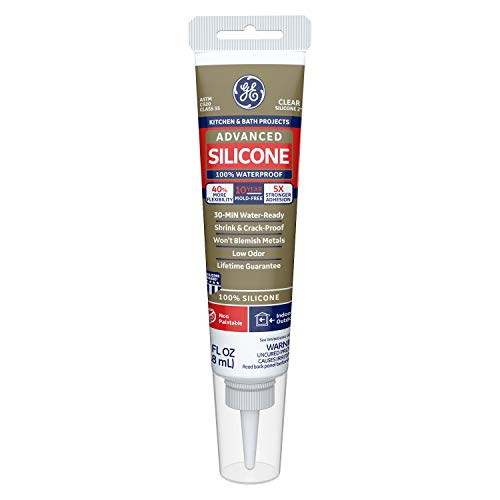
GE Advanced Silicone 2 Kitchen & Bath — clear
A 2.8-ounce tube option when a compatible kitchen-and-bath silicone is specified.
Before you buy: Verify surface and fixture approval, preparation, and cure time. GE does not recommend this product for continuous water contact or structural repairs. It cannot replace a required gasket.
Paid link · Confirm the selected model and package before ordering.
Identify where the seal is supposed to happen
A drain assembly may include a flange above the sink and one or more gaskets below it. A leak at the flange is not the same as a leak at the tailpiece or trap. Before choosing a sealant, identify the assembly and read its installation diagram. Smearing material around the outside of a dripping connection can hide the source without repairing it.
Keep the supplied parts together. An extra gasket that seems unnecessary may be essential, while a gasket shown in one manufacturer’s drawing may not belong in another brand’s assembly.
When plumber’s putty makes sense
Putty is a moldable sealing material commonly used at certain drain and fixture flanges when the manufacturer permits it. It is not a structural adhesive and is not a substitute for a required mechanical fastening or gasket.
Surface compatibility matters. Conventional products and newer stain-free formulations can have different restrictions. Oatey announced a reformulated stain-free putty compatible with ABS in 2024; older blanket advice that ‘all putty is incompatible with ABS’ does not describe every current product. Check the exact container and current instructions. Oatey’s formulation announcement.
When silicone is the specified choice
Some fixtures call for a compatible silicone sealant rather than putty. Confirm the permitted product type, surface preparation, and cure time. A product being labeled ‘waterproof’ does not mean an uncured application can immediately be put into service.
Silicone can adhere where putty remains moldable, so future removal may involve a different cleanup process. That is not a reason to ignore the fixture instructions; it is a reason to apply the correct product neatly and avoid coating unrelated threads or gaskets.
Use this purchase checklist
- Find the drain model. Read its instructions for putty, silicone, or gasket-only sealing.
- Identify every contact surface. Stainless steel, stone, plastic, coatings, and composite materials may have different restrictions.
- Read the actual product label. ‘Stain-free’ is not a guarantee of compatibility with every surface or fixture.
- Plan the service time. If a curing product is required, allow the manufacturer’s stated time before exposure to water.
Do not mix sealing products in an attempt to cover every possibility. Layering putty, silicone, and a gasket without instructions can interfere with how the assembly is intended to clamp and seal.
What neither product should be asked to fix
Neither putty nor a general bathroom silicone is the answer to a cracked drain body, mismatched trap, stripped nut, or incorrect washer. They also are not interchangeable with thread sealant for pressure piping. If the leak is at a slip-joint washer, address the washer, alignment, and component condition.
For an undermount sink that is moving, sealant selection is not a structural mounting plan. Have the supports and mounting system evaluated. A leak that follows movement may return no matter which sealant is applied.
A practical approach for homeowners and property managers
Photograph the assembly before dismantling and retain the model information. Buy the product specified for that installation, not whichever tub or tube is already in the maintenance cart. Record the material used so the next repair begins with useful information.
Renters should report leaks and get approval before removing installed drains. If the sink surface is cracked, water has entered the cabinet, or the drain connection cannot be identified, professional diagnosis can prevent an expensive cosmetic mistake.
Common questions
Is stain-free putty safe on every sink?
No. Check the exact putty label and the fixture or surface manufacturer’s restrictions.
Can I use the sink immediately after silicone?
Follow that product’s cure and water-exposure instructions. Do not assume every silicone has the same timing.
Should I add putty to a rubber gasket?
Only if the assembly instructions call for it. Gasket-only designs should not receive extra sealing material automatically.