
When to Replace a Tubular P-Trap Instead of Reusing It
A tubular P-trap can often be removed and reinstalled for cleaning, but reuse is not automatic. Cracks, deformation, wrong size, damaged slip joints, chemical exposure, and poor alignment make replacement the safer path.
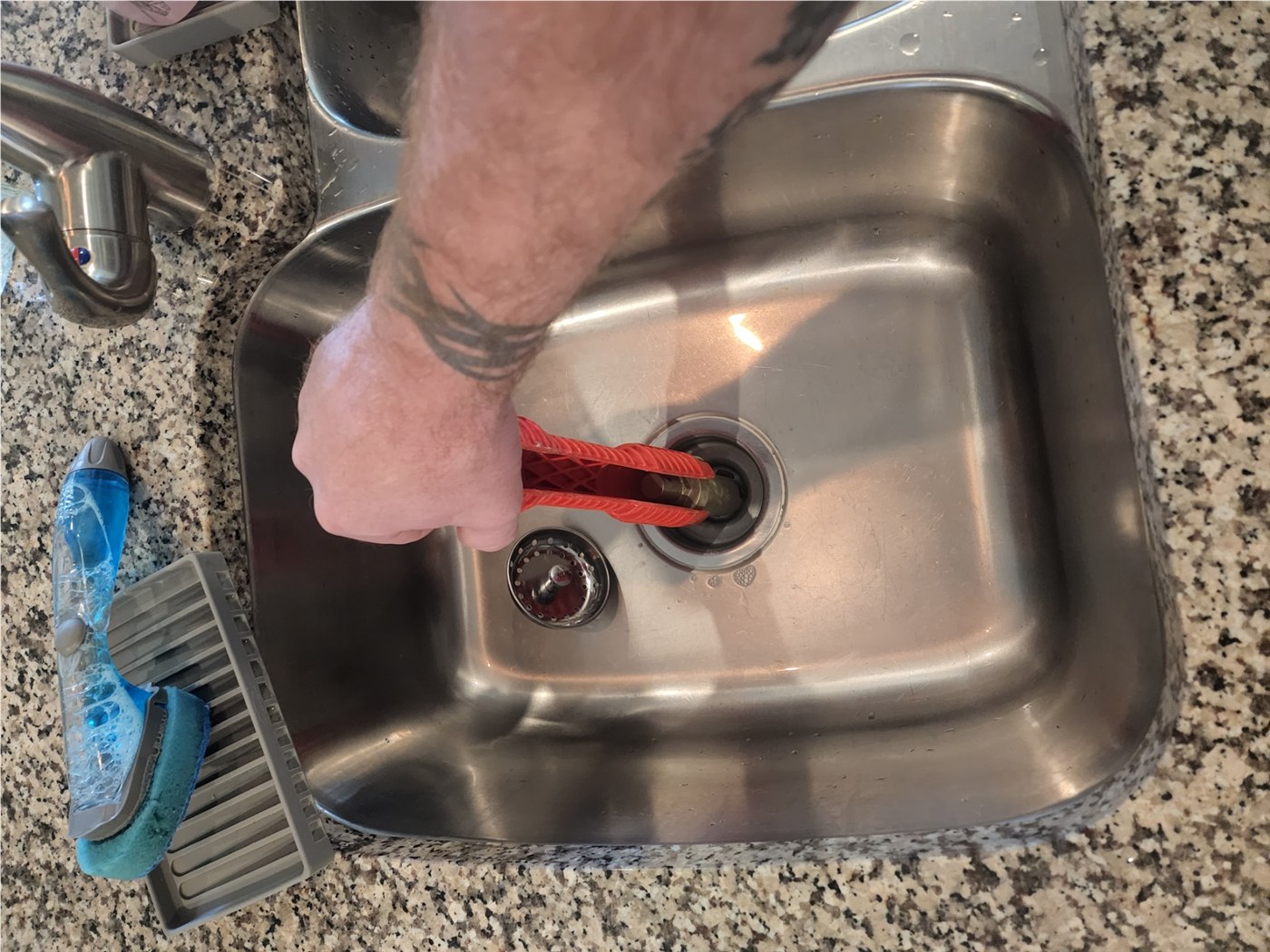
Quick answer
Reuse a tubular P-trap only when the material remains smooth and round, threads are intact, mating tubes align without strain, and fresh compatible washers can seal the joints. Replace it when plastic is brittle or distorted, metal is pitted, nuts are cracked, ends are cut too short for proper engagement, diameters are mismatched, or the trap must be forced sideways to meet the wall arm. Correct 1-1/4-inch versus 1-1/2-inch sizing before ordering.

The stopper, supply connections and P-trap serve different purposes. Start with the accessible area that matches the symptom or repair.
- Stopper and drain openingAccessible hair can collect around the stopper.
- Supply stopsIdentify and check the shutoffs before planning a repair.
- P-trapMatch the existing material, size and connection style.
Who this guide is for
This guide is for accessible sink traps serving an ordinary bathroom or kitchen fixture. It excludes concealed traps, glued drainage, code questions involving unusual layouts, and wastewater backups beyond the fixture arm.
How we evaluated the fit
The decision is based on visible material condition, nominal tubular size, joint geometry, washer sealing, trap depth, and accessible plumbing practice. No product lifespan or leak-free guarantee is claimed.
Three checks that matter first
Use these checkpoints to narrow the field before comparing individual models.
Inspect the full waterline zone
The bottom of the J-bend holds water continuously and often shows the first corrosion, cracking, or thinning. Clean and dry the trap, then inspect under bright light. Flex plastic only gently; whitening, crazing, flat spots, or a seam that opens means it should not be reused.
Verify nominal tube diameter
Bathroom lavatories commonly use smaller tubular components than many kitchen sinks, but the existing installation and local requirements govern. Measure and identify the tailpiece, trap, wall adapter, and any reducing washer. Do not infer size from the slip nut's outer diameter.
Demand natural alignment
A trap should meet the tailpiece and wall arm without bending either connection sideways. Misalignment pulls tapered washers unevenly and can leak after temperature or cabinet movement. Reconfigure with compatible pieces instead of tightening harder to hold a stressed assembly.
Conditions that support safe reuse
A relatively new tubular trap may be reusable after routine cleaning when it has no cracks, pitting, distortion, deep tool marks, or ends cut too short for proper engagement. Trimming a wall tube to fit is a normal installation step; Oatey's P-trap installation guide explains measuring and cutting it to length. A trimmed tube is not automatically damaged. Threads should accept nuts by hand, and the mating tubes should retain enough insertion depth for the washer to seat. Keep every component identified during disassembly because nuts and washers may appear interchangeable while using different tapers or thread forms.
Wash away debris with material-compatible cleaners and inspect sealing surfaces after they are dry. Replace compressed, nicked, swollen, or hardened slip-joint washers rather than relying on their previous shape. Reuse does not mean reapplying pipe thread tape to slip joints; these joints seal at the tapered washer, not at the nut threads. Assemble by hand and reserve tool pressure for the limited adjustment the manufacturer permits.
Damage and history that favor replacement
Replace plastic that has become brittle from age, heat, ultraviolet exposure, or incompatible chemicals. A trap exposed to a strong drain opener deserves particular caution because residue can injure the user and some chemicals can weaken components. On metal tubular traps, green staining, rust scale, pinholes, or a wall that flexes under light pressure indicates lost material even if the trap has not leaked visibly.
Previous modifications also matter. A tube cut too short may barely enter the next fitting; overtightened nuts can distort the end; and tooth marks can create a stress riser. Mixed brands or materials are not automatically wrong, but every diameter, washer, and adapter must be designed to work together. Replacing an inexpensive visible assembly is sensible when uncertain old parts would be the weakest link beneath a finished cabinet.
Rebuild the trap around drainage geometry
Dry-fit the tailpiece, J-bend, and trap arm before tightening. The wall arm should enter its adapter with adequate engagement, and the trap weir must remain in an appropriate relationship to the wall outlet. Avoid flexible accordion extensions, improvised double traps, or an uphill trap arm. Local code and fixture conditions can affect the acceptable arrangement, so ask a plumber when alignment requires more than ordinary tubular adjustment.
Place a pan beneath the assembly, run water at several flow rates, fill and release the basin, and wipe each joint with a dry tissue to expose tiny leaks. Test the disposal and dishwasher connection where present. Reinspect later because a slow slip-joint leak may track along a tube before dripping. Persistent odor or drainage trouble with dry joints may involve venting, a concealed connection, or a restriction beyond the trap.
Options that fit this decision
These links lead to current Amazon listings. Verify the exact model and installation requirements before ordering.

Dearborn P9701 1-1/4-inch Tubular P-Trap
A smaller nominal tubular trap option commonly relevant to lavatory-style assemblies. Suitability depends on actual tailpiece and wall-adapter sizes, enough insertion depth, and an aligned route rather than the room label alone.
- Check first
- Confirm 1-1/4-inch nominal tubing throughout the intended joints, included washers, material, wall connection, and local requirements.
- Best for
- A compatible smaller-diameter sink drain needing a complete, naturally aligned trap replacement.
- Skip if
- The existing system is 1-1/2-inch, glued, concealed, misaligned beyond adjustment, or requires a code-specific transition.
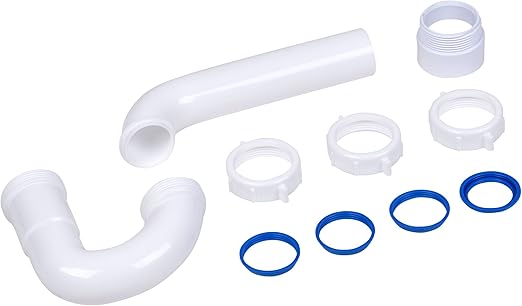
Dearborn P9703WBG 1-1/2-inch P-Trap
A larger nominal tubular option with components intended for a compatible 1-1/2-inch sink-drain arrangement. Product-specific adapters and washer orientation must be checked rather than assumed from diameter alone.
- Check first
- Verify the 1-1/2-inch tailpiece and wall interface, supplied threaded adapter, reversible J-bend orientation, and cabinet clearance.
- Best for
- A matching larger-diameter visible sink drain where old tubular parts are damaged or unreliable.
- Skip if
- The tailpiece is smaller without an approved transition, the outlet is too high, or the layout needs forced alignment.
Frequently asked questions
Can I reuse old slip-joint washers?
Only if they remain undamaged and compatible, but fresh correct washers are generally the more reliable choice after disassembly.
Do P-trap slip nuts need PTFE tape?
Normally no. Tubular slip joints seal at the tapered washer. Tape on the nut threads can interfere with proper assembly.
Can I connect a 1-1/4-inch trap to a 1-1/2-inch wall adapter?
A compatible reducing washer or adapter may be available, but verify the specific fittings, alignment, and local requirements before assembling.