
Thread-Sealing Kit for Home Repairs: Tape, Compound & Clean Threads
A useful thread-sealing kit is not a drawer full of random tapes and pastes. It pairs clean, undamaged tapered pipe threads with a sealant approved for the connection's material, fluid, pressure, temperature, and code requirements.
Quick answer
Keep quality white PTFE tape for compatible small water fittings, an approved pipe-joint compound for connections where its listing and manufacturer instructions fit, a soft brush, lint-free wipes, good lighting, and correctly sized wrenches. Apply sealant only to joints designed to seal at the threads. Compression, flare, slip-joint, union-face, hose-washer, and gasketed connections usually seal somewhere else and should not be wrapped by habit.

The fixture, material and sealing surface determine the product. Do not add thread sealant to every visible nut under a sink.
- Faucet mounting areaAccess and fastener shape affect tool choice.
- Supply stops and hosesIdentify the connection before loosening a part.
- Drain and P-trapDrain joints seal differently from threaded supply fittings.
Who this guide is for
This guide is for ordinary, accessible household water repairs where the fitting maker permits homeowner service. It excludes fuel gas, medical gas, fire protection, refrigerant, boiler, and code-controlled work outside the reader's authorization.
How we evaluated the fit
Selections are based on seal location, fitting material, published product approvals, application control, service conditions, and inspection. No hands-on test or claim that one sealant works on every thread is made.
Three checks that matter first
Use these checkpoints to narrow the field before comparing individual models.
Identify how the joint seals
Tapered pipe threads wedge together and commonly use a compatible thread sealant. Straight mechanical threads may only provide clamping force while a cone, ferrule, washer, O-ring, or gasket stops the fluid. Determine the sealing surface before opening tape or compound.
Read approval and compatibility details
Color alone does not define service. Check the current label and technical information for pipe materials, conveyed fluid, temperature, pressure, potable-water status where relevant, cure or set notes, and any prohibited combinations. Follow the fitting maker when instructions differ.
Reject damaged threads
Sealant cannot restore missing metal, a cross-threaded start, split plastic, an out-of-round adapter, or a fitting that has bottomed before alignment. Clean and inspect male and female threads. Replace questionable components rather than increasing tape thickness or wrench force.
What belongs in a focused kit
Start with inspection and preparation items: a bright light, magnification when needed, a non-damaging brush, lint-free wipes, and a container for old residue. Add open-end or adjustable smooth-jaw tools sized to grip wrench flats, plus a second tool for counter-holding. A connection that cannot be supported should not be tightened from one side merely because sealant is available.
For compatible threaded water connections, a white PTFE tape provides a thin film that follows the male threads, while pipe-joint compound can fill small spiral paths and lubricate assembly. Some specifications allow one method, the other, or both in a defined order. Treat each product as a listed material with instructions, not as a universal upgrade. Store containers closed, clean, labeled, and within their usable condition.
Preparation is part of the seal
Isolate water, relieve pressure, and disassemble without twisting connected piping. Remove loose old tape and incompatible residue without scoring threads. Inspect the first threads closely because cross-threading usually starts there. Test the components together clean and dry only as far as the maker permits; they should begin by hand. Immediate binding or visible wobble means the fitting pair needs correction before sealant.
Keep sealant away from the open end of the male fitting. For tape, begin back from the first thread and wrap in the direction that assembly will tighten so the tape does not unravel. Use the product's instructed number of wraps and tension rather than building a bulky rope. For compound, apply an even controlled film to the specified threads and prevent excess material from entering the water path.
Assembly, alignment, and leak checks
Start the connection by hand for multiple turns. Use wrench flats, counter-hold the stationary side, and stop at the instructed engagement or alignment. A tapered joint gets progressively tighter, but more rotation is not always safer. Plastic female fittings can split from expansion, plated surfaces can scar, and a valve can be damaged if it is forced past its intended orientation.
After any manufacturer-required waiting time, restore water slowly while the connection remains visible. Dry the area and inspect with a tissue at operating pressure, then cycle the connected fixture. A weep is not a request for an extra quarter-turn by default; depressurize and determine whether the joint is loose, cross-threaded, cracked, contaminated, or sealed by a different surface. Recheck later and never conceal an unverified connection behind a wall or cabinet panel.
Options that fit this decision
These links lead to current Amazon listings. Verify the exact model and installation requirements before ordering.

Oatey White 31199 Thread Seal Tape
A thin tape option for compatible threaded connections identified in the current product directions. It can provide controlled coverage without curing, but excess layers or tape over the opening can interfere with assembly and contaminate the flow path.
- Check first
- Verify fitting materials, thread type, conveyed fluid, service limits, approval needs, wrap direction, and instructed coverage.
- Best for
- An accessible, undamaged threaded water fitting specifically compatible with white PTFE tape.
- Skip if
- The joint seals with a ferrule, flare, washer, gasket, O-ring, or product instructions prohibit tape.
Great White Pipe Joint Compound
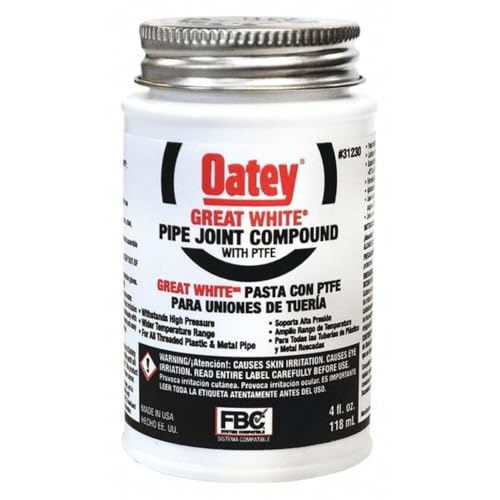
A paste-style thread sealant that can coat compatible male pipe threads and ease assembly when its current approvals match the service. Material, fluid, temperature, and application restrictions remain decisive.
- Check first
- Read the current label for permitted pipe materials and services, potable-water status if applicable, application amount, and any setup guidance. Check Oatey's Great White technical submittal for application instructions and waiting times.
- Best for
- A tapered threaded connection whose manufacturer and service conditions permit this compound.
- Skip if
- Compatibility is uncertain, the connection is gasketed or mechanical-seal type, or damaged threads are the real problem.
Frequently asked questions
Should I use PTFE tape on compression threads?
Usually no. A compression joint seals at the ferrule and mating surfaces; tape on the nut threads can interfere with correct tightening.
Is pipe-joint compound better than tape?
Neither is universally better. The fitting maker, sealant approvals, materials, and service conditions determine which method is appropriate.
Can more tape stop a leaking threaded fitting?
Extra tape cannot repair cracks, cross-threading, mismatched threads, or a joint that seals elsewhere. Depressurize and diagnose the cause.