
Combination Meter Lid Key vs. Dedicated Shutoff Key
A combination key can bundle a lid hook, curb-key end, or cross-key features into one tool. A dedicated key concentrates on one verified interface. Neither approach is inherently better: the useful choice is the one that fully fits the authorized cover and valve without awkward reach, partial engagement, or unnecessary leverage.
Quick answer
Choose a combination tool when you have confirmed that both its lid feature and valve end match the same box. Choose a dedicated lid key or dedicated curb key when the interface is known and simplicity improves fit. Two correctly matched tools are better than one multifunction tool whose most important end does not engage.

The lid, meter-side valve and customer shutoff are separate items. Identify the actual parts and local utility rules before deciding what belongs in the kit.
- Meter-box lidA lid key and a valve key do different jobs.
- Meter-side valveUtility rules and valve shape must be confirmed.
- Separate shutoffThe customer shutoff location and design vary.
Who this guide is for
This guide is for homeowners deciding whether one multi-purpose water-meter tool can replace separate lid and shutoff keys. It is also a compatibility checklist for an existing emergency tool. Utility ownership and access rules come first; if the water provider controls the meter or curb stop, the proper plan may be calling them and using a separate customer-side house valve.
How we evaluated the fit
The comparison examines listed functions, working-end geometry, shaft reach, handle clearance, storage, and the risk of confusing access tools with valve tools. It is based on specifications and tool form, not hands-on testing. Local box and valve designs vary, so current measurements and authoritative instructions are required.
Three checks that matter first
Use these checkpoints to narrow the field before comparing individual models.
Count confirmed functions, not advertised functions
A two-in-one tool offers no benefit if only the lid hook fits. Treat every end as a separate compatibility check and choose based on the critical shutoff task, not the number of shapes on the handle.
Dedicated tools can improve clarity
A purpose-labeled lid key and a separately sized curb key reduce confusion during an emergency. They can also let each tool use the length and handle style appropriate to its task.
Combination tools can improve portability
When both interfaces truly match, one T-handle can reduce kit size and misplaced parts. The tradeoff is that its fixed shaft and handle must suit both surface access and valve operation.
Identify the two separate jobs
Opening the meter-box lid may involve a lift slot, keyhole, pentagon-style fastener, hook point, or another design. That task requires a tool that engages without prying against a fragile edge. Once the cover is open, valve operation involves a different component below. A curb stop may present a rectangular head or another sized interface, and the customer-side valve may be elsewhere entirely. Photographing and labeling safely visible components can prevent a dangerous mix-up.
Do not infer ownership from location. The meter and curb stop may be utility equipment, and local rules may prohibit customer operation. Confirm the approved emergency procedure with the provider. If the accessible house shutoff works, the meter lid may not need to be part of the homeowner's immediate response at all. Tool selection should support the authorized plan rather than creating a new, unfamiliar one.
Where a combination tool earns its place
A combined lid-opener and T-handle can be efficient when the cover feature matches, the shaft reaches the valve, the curb-key end seats fully, and the handle can turn in clear space. Cross-key additions can help with other known enclosures, but they should not be treated as evidence of universal compatibility. Check overall and usable length, material, working-end dimensions, and whether the tool can be controlled from a stable position above the box.
The main weakness is compromise. A tool long enough for a deep valve may feel clumsy for a shallow lid. A compact combination key may open the cover but leave the valve out of reach. Multiple ends can also make it less obvious which feature belongs to which component. Label the correct end and keep a photo or diagram with the emergency kit. If anyone would need to experiment during a leak, the setup is not yet ready.
Where dedicated keys are the cleaner choice
A compact dedicated lid key can fit a verified opening and store easily. A separate valve key can then be selected for exact depth and curb-head size. This two-tool approach makes it possible to replace one item if the utility changes the cover or if a different valve length becomes necessary. It also discourages using the lid tool as an improvised lever. Carrying two labeled pieces can provide clearer function and better geometry.
Dedicated heavy-duty valve keys make the most sense when the end size is known and recurring professional-style access justifies their storage. They are not a cure for a seized valve. Review the plan annually, keep the customer-side valve maintained, and include utility and plumber contact numbers. During an actual uncontrolled leak, fast professional help may be safer than testing whether a newly purchased key fits.
Separate lid access from shutoff operation
A key that opens a cover is not automatically the correct or authorized tool for the valve below it. The City of Frisco's official leak manual explains its meter-box layout and shutoff guidance, while current Public Works guidance directs residents to call for help when a shutoff cannot be identified or accessed. For the compact Eastman option below, the manufacturer's official tools catalog lists model 82650 as a brass meter-box key and distinguishes it from longer valve keys. Confirm your utility's rules, the exact cover interface, and the valve geometry before buying or operating any tool.
Options that fit this decision
Back to fit and safety shortcuts ↑
These links lead to current Amazon listings. Verify the exact model and installation requirements before ordering.

2-in-1 Water Meter Valve Key with Lid Opener T-Handle
This product represents the combination approach: a T-handle valve function paired with a lid-opening feature. It can simplify a kit if both working ends match the same authorized box and its shaft reaches comfortably. Evaluate the lid hook, curb end, shaft, and handle as four separate fit questions.
- Check first
- Confirm lid interface, valve-head geometry, depth, and full handle swing against the current product dimensions.
- Best for
- A known box where both listed functions have been verified and one-tool storage is useful.
- Skip if
- Either interface is uncertain or the fixed tool length compromises safe access.
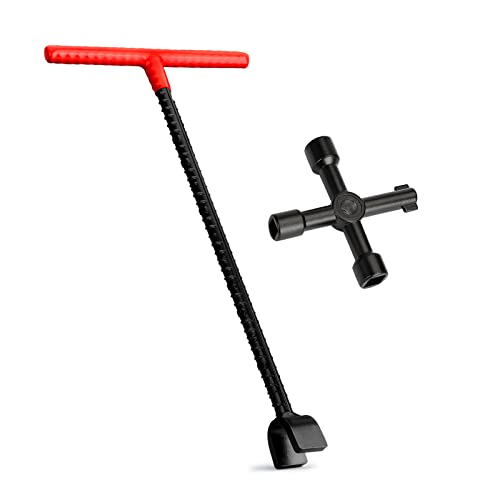
Eapele 16-inch Water Meter Key with T-Handle
This design pairs a moderate-length T-handle curb key with a multi-functional cross-key feature. It may cover more than one identified interface, but the cross key is not necessarily a meter-lid match and the sixteen-inch shaft may not suit every box. Compare each stated feature with actual measurements.
- Check first
- List the exact cross-key and curb-key functions you need, then verify their sizes and the required reach.
- Best for
- A moderate-depth setup with confirmed uses for both the T-handle end and one cross-key interface.
- Skip if
- You need a simple lid hook, a deeper valve key, or have no identified use for the extra ends.

Eastman Water Meter Box Key / Valve Box Key, Brass, 82650
The Eastman brass key is a compact dedicated box-access option. Its role should be confirmed from current dimensions and the actual lid opening rather than confused with a long curb-valve key. A small purpose-specific tool can make the kit clearer when a separate valve key handles reach and turning.
- Check first
- Verify the working end against the box cover and ensure the short form leaves safe grip clearance.
- Best for
- A known compatible meter- or valve-box lid where a compact dedicated key is preferred.
- Skip if
- The task requires reaching a recessed shutoff below the cover.

Feekoon 5.5-inch Water Meter Box Lid Key
This small lid-key format is another dedicated access choice. It can be easy to label and store, but its exact tip geometry should be compared with the local cover. The short length intentionally favors surface access rather than deep-valve reach.
- Check first
- Confirm cover opening dimensions and whether the hand can remain above sharp or obstructed edges while lifting.
- Best for
- A shallow, verified lid-opening task within an authorized emergency route.
- Skip if
- You are selecting one tool to open the cover and operate a deep valve.
Frequently asked questions
Is a two-in-one water meter key better value?
Only when both features match real tasks in the same emergency plan. An unused or incompatible second end adds no practical value.
Can a lid key shut off the water?
A dedicated lid key generally provides access to the enclosure. Valve operation requires the correct authorized valve tool or a separate household shutoff.
Why carry two tools instead of one combination key?
Separate tools can provide a better-matched length and working end for each job, while clear labels reduce confusion during an emergency.